
Discreet Male Enhancement Treatment NYC: The Complete Privacy Protocol Guide
Introduction: Why Privacy Comes First for NYC Men Seeking Enhancement
When a professional man types “discreet” into a search query about male enhancement, he is communicating something specific: privacy concerns represent his primary barrier to booking, not clinical outcomes or cost. This unspoken reality drives thousands of searches each month from accomplished individuals who have built careers, reputations, and relationships they cannot afford to jeopardize.
Professional men aged 25 to 54 in New York City’s top income brackets have the most to protect. Career reputation, personal relationships, and public image all factor into the calculus of seeking any sensitive medical treatment. The decision to pursue male enhancement is deeply personal, yet the fear of exposure often prevents men from taking the first step toward a solution they never imagined existed.
This guide systematically addresses every layer of the privacy infrastructure surrounding discreet male enhancement treatment in NYC. Readers will gain complete confidence in understanding HIPAA protections, billing privacy, digital security, in-clinic experiences, staff protocols, and considerations unique to New York City.
The decision itself is increasingly mainstream. A 2025 review published by Wolters Kluwer Health found that nearly half of men seeking enhancement cite improving self-esteem as their primary motivation. The same research confirmed that most patients presenting to clinics have clinically normal anatomy. This is not about addressing a medical deficiency; it is about reclaiming confidence through a medically validated choice.
Throughout this guide, the privacy infrastructure of Stoller Medical Group at 515 Madison Avenue will serve as a reference point for what privacy-conscious patients should expect from a top-tier NYC provider.
The Legal Foundation: How HIPAA Protects Male Enhancement Records in NYC
One of the most dangerous misconceptions circulating among potential patients is that HIPAA does not apply to elective cosmetic procedures or cash-pay clinics. Legal analysis from the Marti Law Group confirms this belief is “wholly inaccurate.”
HIPAA covers all Protected Health Information in this context, including consultation records, treatment notes, appointment confirmations, and even the fact that an individual is a patient. NYC male enhancement clinics employing licensed medical professionals are fully covered entities under HIPAA’s Privacy and Security Rules. Stoller Medical Group, with procedures performed or supervised by board-certified physicians, falls squarely within this protection.
HIPAA prohibits staff from disclosing a patient’s name, treatment type, appointment dates, or any identifying information to any third party without written authorization. The “minimum necessary” standard further restricts access: a front-desk coordinator cannot browse treatment records that fall outside her specific role.
HIPAA violations carry civil penalties up to $1.9 million per violation category annually. This substantial financial consequence gives clinics a powerful legal incentive to maintain strict compliance. New York State’s additional health privacy protections exceed federal HIPAA minimums in certain cases, providing a second layer of legal protection for NYC patients.
Digital Privacy: How Patient Information Is Protected Before the First Visit
The privacy journey begins with the first digital touchpoint. HIPAA-compliant scheduling software means encrypted data storage, access controls, and audit logs tracking who views patient information. As of 2025, encryption is a HIPAA requirement for all emails containing PHI, not merely a recommendation.
Compliant clinics use neutral language in email subject lines. Appointment confirmations read “Your Upcoming Appointment” rather than naming the procedure. A patient’s inbox will never display a sensitive subject line that could be glimpsed by a colleague or family member.
Telehealth and phone consultations require HIPAA-compliant video platforms. Standard Zoom or FaceTime do not meet these requirements. Any consultation involving PHI must occur through encrypted, secure channels.
For those researching treatment options, using a private browser window and a personal device protects against employer monitoring. Patient portals used by compliant clinics are encrypted and password-protected; records are not accessible via a simple URL.
Social media presents a unique concern. A HIPAA-compliant clinic will never tag, mention, acknowledge, or reference a patient on social media without explicit written consent. Even a seemingly innocent “Thanks for coming in!” post can constitute a HIPAA violation if it identifies someone as a patient.
The Billing Privacy Protocol: What Will Appear on a Statement
The single most searched but least answered privacy question concerns billing: how will a charge appear on a credit card or bank statement?
Reputable NYC clinics use a neutral, non-descriptive practice name as the billing descriptor. At Stoller Medical Group, charges appear under the practice name, never under a procedure description. The statement will not read “penis enlargement,” “male enhancement,” or any variation thereof.
Because these are cash-pay elective procedures, they are not submitted to insurance. No Explanation of Benefits document will be generated and mailed to a patient’s home or accessed through an insurance portal. This means no insurance company, employer health plan, or third-party administrator will ever have access to treatment records.
Payment receipts and invoices from the clinic also use neutral language and can be delivered digitally to a private email address of the patient’s choosing. For those using third-party medical financing, the statement descriptor is typically the financing company’s name, not the clinic or procedure. Patients should confirm this with their specific financing provider.
The In-Clinic Privacy Experience: From Arrival to Departure
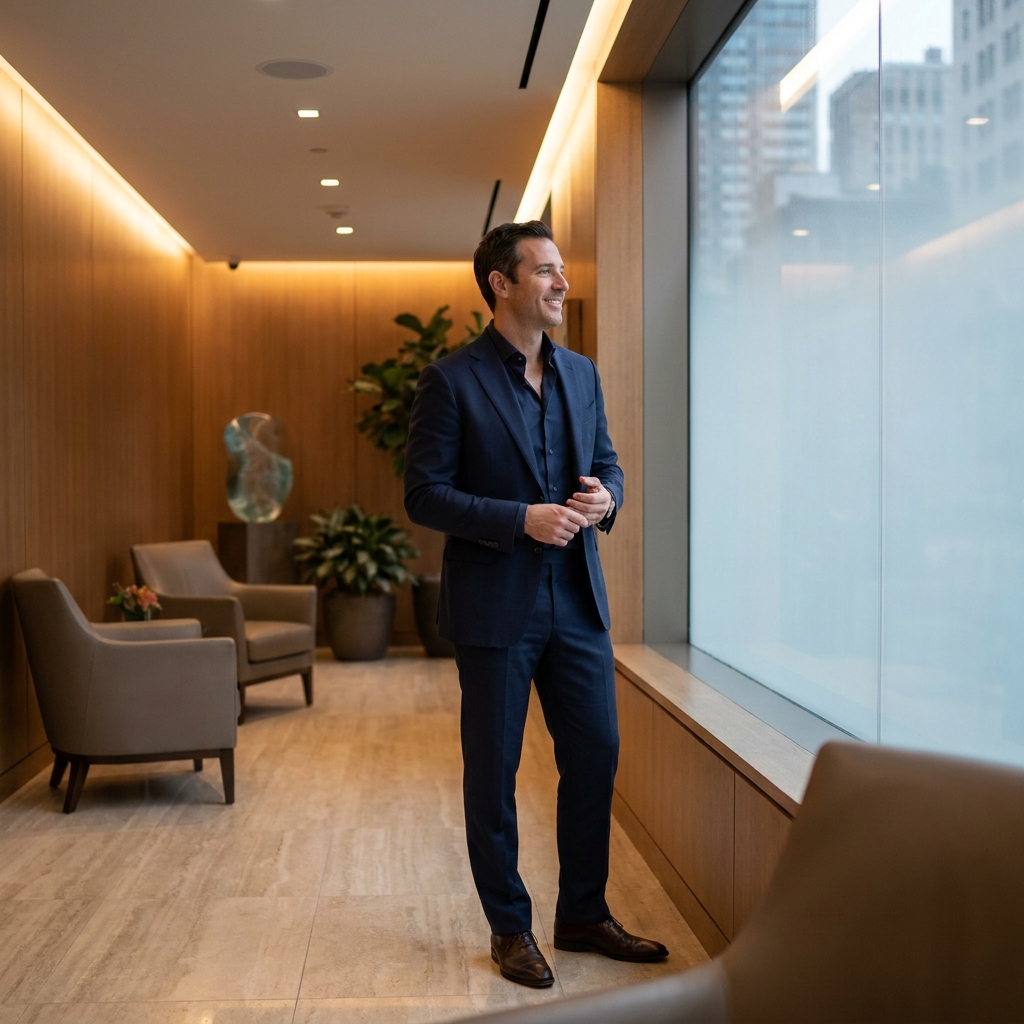
A properly designed NYC male enhancement clinic features private consultation rooms, discreet waiting areas, and where applicable, separate entrances or suites. The physical architecture of privacy matters.
In a dense professional city like New York, the anxiety of running into acquaintances is real. Staggered appointment scheduling, private check-in processes, and separate waiting areas mitigate this risk. Digital check-in and private intake forms replace public clipboard sign-ins, minimizing personal information spoken aloud at reception.
All sensitive discussions, physical assessments, and treatment planning occur in a fully private, soundproofed room. Procedures are performed in a private clinical suite with only the treating physician and necessary clinical staff present.
Post-treatment discretion is equally important. Patients leave looking exactly as they arrived. Non-surgical filler procedures, completed in under one hour with no visible recovery markers, mean no one in a patient’s office or social circle will notice anything different. The 10-day recovery timeline for Stoller Medical Group’s Belefil procedure, with sexual activity resumable in 7 to 10 days, means minimal disruption to a professional schedule.
Staff Confidentiality Training: The Human Layer of Privacy
Technology and legal frameworks only work if the humans implementing them are properly trained. Staff confidentiality training covers HIPAA Privacy Rule obligations, the prohibition on discussing patients outside clinical necessity, social media policies, and how to handle inquiries from third parties.
Staff are trained never to confirm or deny that an individual is a patient when contacted by anyone other than the patient. This includes family members who may call asking about a spouse or partner.
Clinical and administrative staff at reputable male enhancement clinics sign non-disclosure agreements as a contractual reinforcement of their HIPAA obligations. Staff who violate patient confidentiality face termination and potential personal HIPAA liability.
At specialized male enhancement clinics, staff are selected and trained specifically for this patient population. There is no awkwardness, curiosity, or commentary. Dr. Stoller’s team, with over 15,000 procedures performed, has developed a deeply normalized, professional culture around these treatments. Discretion is institutional, not incidental.
Treatment Options Available in NYC: A Privacy-Conscious Overview
Different treatments have different visit frequencies, recovery profiles, and discretion implications. Understanding available options helps patients choose the most privacy-compatible path.
Non-Surgical Hyaluronic Acid Filler Girth Enhancement
This is the dominant modality in NYC and Stoller Medical Group’s primary offering using Belefil HA filler. The privacy advantages are significant: outpatient treatment under one hour, no visible recovery markers, no hospital stay, and no general anesthesia.
A 2025 Journal of Sexual Medicine study confirmed that “penile girth enhancement by subcutaneous hyaluronic acid injection is a safe and effective procedure associated with high patient-satisfaction rates.” A World Journal of Men’s Health randomized controlled trial found a mean girth increase of 22.74mm with no serious adverse events.
HA fillers are reversible with hyaluronidase, providing significant psychological reassurance. Results last 18 to 24 months, with Stoller’s protocol achieving 80 to 90 percent permanent improvement. The staged treatment approach means multiple discreet visits rather than one dramatic session. No insurance submission, no hospital records, and no surgical facility paperwork keep the privacy footprint minimal.
P-Shot (PRP Injections) for Sensitivity and Erectile Function
The P-Shot uses the patient’s own platelet-rich plasma for erectile function and sensitivity enhancement. It is drug-free and regenerative. The privacy profile is excellent: single office visit, no prescription required, no pharmacy records, no controlled substances. Results last 6 to 18 months, with pricing typically ranging from $1,500 to $3,000 in NYC.
Low-Intensity Shockwave Therapy (LI-ESWT)
This non-invasive acoustic wave therapy addresses erectile dysfunction and vascular improvement. The privacy profile is extremely low-impact: a series of short outpatient sessions with no injections, no medications, and no pharmacy records. One clinical study showed 70% of patients had improved erectile function scores at six months.
Surgical Options: What to Know
For completeness, surgical penile implant options are available at some NYC providers. Surgical options require a surgical facility, anesthesia records, and longer recovery, creating a larger privacy footprint.
Stoller Medical Group explicitly does not offer surgical penile lengthening, prioritizing patient safety over revenue. For most privacy-conscious professional men, non-surgical options offer equivalent or superior discretion.
Why NYC Is the Right City for Discreet Male Enhancement Treatment
NYC’s density of specialized providers means patients are not a curiosity. Male enhancement is a routine, high-volume specialty at top Manhattan clinics. The anonymity of NYC works in a patient’s favor. Arriving at a professional medical suite at 515 Madison Avenue is indistinguishable from any other specialist appointment. The concentration of board-certified specialists with high procedure volumes means access to the most experienced practitioners in the country.
The medical spa industry in the U.S. was valued at $7.36 billion in 2024 and is projected to reach $27.29 billion by 2034. NYC is at the epicenter of this growth. Male cosmetic procedures grew 4% to 1.6 million in 2024 according to ASPS data. The cultural normalization of male aesthetic treatment is accelerating, and NYC leads this trend.
Traveling to NYC for Treatment: A Discreet Logistics Guide
A significant segment of men travel specifically to NYC for discreet treatment. Patients should book accommodations near the clinic in Midtown Manhattan. There is no reason to disclose the purpose of a visit; a business trip framing is entirely plausible. The under-one-hour procedure time and minimal recovery profile mean same-day or next-day return is feasible.
Scheduling appointments for Thursday or Friday allows the weekend for any minor recovery before returning to professional obligations. Patients should use personal devices on private networks for all communications with the clinic. The 515 Madison Avenue address is a professional office building where arriving and departing is entirely unremarkable.
Patient Privacy Rights: A Summary of What to Expect
Before booking any NYC male enhancement clinic, patients should verify these privacy rights are in place:
- Right to a Notice of Privacy Practices: Every HIPAA-covered clinic must provide this document explaining how PHI is used and protected.
- Right to access records: Patients can request copies of treatment records and request restrictions on certain uses of their information.
- Right to an accounting of disclosures: Patients can request a log of who has accessed or received their PHI in the past six years.
- Right to file a complaint: Patients can file complaints with the HHS Office for Civil Rights without fear of retaliation.
- Right to confidential communications: Patients can request that the clinic contact them only through specific channels.
Practical verification questions include: “What does my charge appear as on a bank statement?”, “Do you use encrypted email for appointment communications?”, and “What is your social media policy regarding patients?”
Conclusion: Privacy Is Not a Feature; It Is the Foundation
For professional men in NYC, the decision to seek male enhancement treatment is not primarily about size. It is about reclaiming confidence while protecting everything they have built.
The privacy infrastructure exists to protect them: HIPAA legal protections, encrypted digital communications, neutral billing descriptors, no insurance submission, staff confidentiality training, NDAs, and a judgment-free clinical environment.
Stoller Medical Group has performed over 15,000 procedures with a practice culture built around discretion. NYC’s professional medical infrastructure is specifically designed for high-profile, privacy-conscious patients.
A 2024 Aesthetic Plastic Surgery study confirmed that privacy and stigma concerns remain key barriers for male aesthetic patients. This guide systematically addresses those barriers.
The combination of peer-reviewed clinical evidence, comprehensive legal protections, and a purpose-built privacy infrastructure means that seeking discreet male enhancement treatment in NYC is a well-protected, medically validated, and increasingly mainstream decision.
Schedule a Private Consultation at Stoller Medical Group NYC
Men ready to take the next step can schedule a free, confidential consultation at 515 Madison Avenue, Suite 1205, Manhattan, NY 10022.
The consultation is a private, judgment-free conversation about individual goals with no obligation to proceed. HIPAA protections begin the moment a patient reaches out. Inquiries are confidential, and contact information will never be shared.
During the consultation, patients receive a personalized assessment, realistic outcome discussion, clear explanation of privacy protocols, and a customized treatment plan if they choose to proceed.
For those not yet ready to call, reviewing the before-and-after gallery or educational resources on the website offers additional preparation.
Patient privacy is not a courtesy extended. It is a legal obligation taken seriously and a professional standard upheld across 15,000 procedures.