
Food for Good Erection: The Anti-Inflammatory Dietary Pattern That Outperforms Any Single Superfood
Introduction: Why the “Best Foods for Erections” Conversation Is Missing the Point
Erectile dysfunction is no longer a fringe concern. By 2025, ED was projected to affect roughly 322 million men worldwide, up from 152 million in 1995, nearly doubling in three decades. In the United States, approximately 24% of men experience ED, with prevalence climbing steeply with age. For many high-performing men in their 30s, 40s, and 50s, this shows up quietly: a man who closes deals, leads teams, and runs households finds himself losing confidence in the one arena where willpower alone does not solve the problem.
The internet’s response has been a parade of “superfood” lists. Eat oysters. Add watermelon. Sprinkle in dark chocolate. The trouble is that no single food fixes a systemic problem. Erectile quality is not determined by one ingredient on one plate. It is the cumulative product of how a man eats, day after day, and what that pattern does to his vascular system.
This article reframes the question entirely. Erectile quality is a downstream outcome of systemic inflammation and vascular health. The food a man eats either protects or erodes that foundation over time. Readers will encounter clinically validated frameworks like the Dietary Inflammatory Index (DII) and the Composite Dietary Antioxidant Index (CDAI), the nitric oxide pathway that links diet to performance, the powerful connection between ED and cardiovascular disease, and the strong evidence behind Mediterranean and anti-inflammatory dietary patterns. This is not about shame or quick fixes. It is about understanding the science and making informed decisions.
Erectile Dysfunction Is a Vascular Problem First, and Diet Is a Vascular Intervention
An erection is fundamentally a hydraulic event. When a man becomes aroused, penile arteries dilate, blood rushes in to fill the corpus cavernosum, and pressure traps that blood to sustain rigidity. The entire process depends on healthy endothelial function: the proper working of the thin inner lining of the blood vessels.
When that lining loses its ability to regulate blood flow, inflammation, and clotting, the result is endothelial dysfunction, the root cause of both ED and cardiovascular disease. This is why the Mayo Clinic and Harvard Health both describe erections as a “barometer” of overall health. Penile arteries are smaller than coronary arteries, so endothelial dysfunction often reveals itself as ED years before it surfaces as a heart attack. Men with ED carry approximately twice the risk of heart attacks and strokes compared to men without it.
The logic follows cleanly: if ED is a vascular problem, and diet is one of the most powerful modifiable influences on vascular health, then food for good erection is not a niche topic. It is preventive cardiology. And the unit of intervention that matters most is not any single food, but the overall dietary pattern.
The Dietary Inflammatory Index (DII): A Clinically Validated Score That Predicts ED Risk
The Dietary Inflammatory Index is a validated research tool that scores an individual’s overall diet on a spectrum from maximally anti-inflammatory to maximally pro-inflammatory, drawing on 45 distinct food parameters. A high DII score reflects a diet heavy in refined carbohydrates, ultra-processed foods, saturated fats, and sugar, all of which drive chronic low-grade inflammation: a fundamental pathological factor in ED.
A 2025 NHANES cross-sectional study published in Frontiers in Nutrition found a significant positive association between DII score and ED (OR: 1.07, p<0.001). In plain terms, each incremental increase in dietary inflammatory load measurably raised the odds of ED.
The same study examined the Composite Dietary Antioxidant Index, a complementary measure that quantifies the antioxidant capacity of the overall diet across vitamins A, C, and E, selenium, zinc, and carotenoids. Higher CDAI scores were protectively associated with lower ED prevalence, reinforcing that antioxidant-rich dietary patterns reduce risk.
These indices matter more than any single food because they capture the cumulative, systemic effect of how a man eats over years. No one needs to calculate a personal DII score, but understanding that a dietary pattern carries a measurable inflammatory signature should reframe how a man thinks about every meal.
Nitric Oxide: The Biochemical Bridge Between What You Eat and How You Perform
Nitric oxide (NO) is the central biochemical mechanism connecting diet to erectile quality. NO relaxes the smooth muscle in penile blood vessels, triggering the vasodilation that makes an erection possible. Two primary dietary pathways produce it: the nitrate-nitrite-NO pathway, fueled by leafy greens and beets, and the L-arginine/L-citrulline pathway, fueled by watermelon, nuts, and legumes.
Chronic inflammation and oxidative stress deplete NO bioavailability. Reactive oxygen species break NO down before it can act. This is the mechanistic link between a pro-inflammatory diet and erectile dysfunction. Antioxidant-rich foods protect NO by neutralizing those reactive species.
This explains why the Mediterranean diet works at the biochemical level. Research shows adherence raises arginine levels and increases NO activity, directly improving the conditions for an erection. It also explains why a diet focused on whole plant foods can enhance penile erection: it delivers nitrates, L-arginine, and L-citrulline as substrates for NO production while simultaneously reducing oxidative stress.
The Mediterranean and Anti-Inflammatory Dietary Patterns: The Evidence-Backed Macro-Strategy
The Mediterranean diet is the most evidence-backed dietary pattern for reducing ED risk, endorsed by the NIDDK (part of the NIH) and supported by multiple peer-reviewed clinical trials.
The landmark Health Professionals Follow-up Study, published in JAMA Network Open in 2020, tracked 21,469 men and found that higher adherence to either a Mediterranean or Alternative Healthy Eating Index 2010 diet was associated with significantly lower risk of developing ED. A 2006 controlled clinical trial showed that men with metabolic syndrome placed on a Mediterranean diet experienced improved endothelial function, reduced inflammatory markers, and lower ED prevalence after two years. A 2024 meta-analysis published in the Asian Journal of Andrology in 2025, spanning 14 studies and 27,389 participants, found plant-based diets associated with a 29% lower odds of ED (OR = 0.71).
Each core component of the diet earns its place:
- Olive oil: anti-inflammatory oleocanthal
- Fatty fish: omega-3s for endothelial health
- Legumes: L-arginine substrate
- Leafy greens: nitrates
- Whole grains: magnesium and fiber
- Nuts and walnuts: omega-3s and arginine
- Fruits: flavonoids
There is an important nuance that competitors often miss. The plant-based diet index distinguishes between a healthful version (hPDI), built on whole plant foods, and an unhealthy version, built on refined grains, sugary foods, and processed plant products. Only the healthful version reduces ED risk. Losing even 5% to 10% of body weight through dietary improvement can also improve erectile function, reinforcing that the overall pattern matters more than any single food.
Key Nutrients That Directly Support Erectile Health
What follows is the nutrient layer within the broader dietary pattern, organized by mechanism rather than by food.
Nitrates and L-Arginine/L-Citrulline: The NO Precursors
- Nitrates in leafy greens (spinach, arugula, kale) and beets convert to NO and directly support penile vasodilation.
- L-arginine, the direct precursor to NO synthesis, is found in nuts, legumes, seeds, and whole grains.
- L-citrulline, concentrated in watermelon, converts to L-arginine in the kidneys for a sustained NO substrate.
Daily leafy green servings, beet inclusion, and legume-based meals are the most efficient delivery systems for these compounds.
Flavonoids: The Vascular Protectors in Fruits and Dark Chocolate
Research from Harvard and the University of East Anglia found that flavonoid-rich foods (berries, citrus, apples, dark chocolate) are associated with a 9% to 19% lower incidence of ED. Flavonoids improve endothelial function, reduce oxidative stress, and enhance NO bioavailability. Cleveland Clinic data found that men who regularly eat antioxidant-rich fruit are 19% less likely to experience ED. Daily berries, citrus, and moderate dark chocolate (70%+ cacao) are high-leverage, accessible additions.
Omega-3 Fatty Acids, Zinc, Magnesium, and Vitamin D
- Omega-3s (fatty fish, walnuts) reduce systemic inflammation and improve endothelial function.
- Zinc (oysters, shellfish, nuts, seeds) is essential for testosterone synthesis; deficiency is linked to hypogonadism.
- Magnesium (whole grains, leafy greens, legumes) helps prevent vascular calcification and supports smooth muscle relaxation, yet remains underconsumed in Western diets.
- Vitamin D (fatty fish, fortified foods, sunlight) is independently associated with ED when deficient, a condition highly prevalent in men aged 30 to 50.
Vitamin B1 (thiamin), found in whole grains and legumes, also plays an underreported role in nerve signaling between the brain and sexual organs.
Allicin and Caffeine: Two Underreported Vascular Allies
Allicin, from garlic and onions, acts as a vasodilator by stimulating NO production and reducing arterial stiffness. Caffeine carries modest evidence that 2 to 3 cups of coffee daily is associated with reduced ED risk, likely through improved circulation. Both are supporting elements within the broader pattern, not standalone solutions.
Foods and Dietary Patterns That Actively Erode Erectile Function
The inflammatory pattern is defined as much by what it excludes as by what it includes.
- Ultra-processed foods: trans fats, refined carbohydrates, sodium, and additives drive endothelial dysfunction and are the primary driver of a high DII score.
- Refined carbohydrates and sugary drinks: glycemic spikes, insulin resistance, and oxidative stress deplete NO bioavailability.
- Excess alcohol: acutely impairs NO signaling and chronically disrupts testosterone metabolism.
- Excess soy products: phytoestrogens in very large quantities may disrupt hormonal balance in some men.
- Licorice: glycyrrhizin can suppress testosterone with regular consumption.
A diet dominated by these foods produces a high DII score, which the 2025 NHANES data directly ties to elevated ED odds. There is also an emerging gut-hormone-erection axis: fiber-poor, processed diets reduce gut microbiome diversity, impair testosterone metabolism, and may contribute to estrogen dominance.
The Science in Progress: What the ERECTION and ERECTION 2 Trials Are Testing
The diet-ED connection is an active frontier, not settled wisdom. Two trials at Montefiore Medical Center underscore this. The ERECTION trial (NCT04349059) is a randomized study comparing a plant-based diet versus an animal-based diet on erectile function in healthy men, with completion estimated in December 2026. The follow-up ERECTION 2 trial (NCT06273592) compares plant-based meat meals versus animal meat meals, with completion estimated in June 2027.
These trials will clarify whether the benefit of plant-based eating comes from the absence of animal products, the presence of specific plant compounds, or a combination of both. That major medical centers are funding and recruiting for these studies signals that diet is now taken seriously as a clinical intervention. The observational and cohort data is already strong and consistent; the randomized trial data, expected within the next one to two years, will provide the highest level of evidence.
ED as an Early Warning System: The Cardiovascular Connection You Cannot Afford to Ignore
Penile arteries measure 1 to 2 millimeters in diameter, while coronary arteries measure 3 to 4 millimeters. Endothelial dysfunction therefore manifests as ED years before it produces angina or a cardiac event. The Mayo Clinic states plainly that ED may be an early sign of heart disease, with symptoms appearing years ahead of cardiac trouble. Men with ED face roughly twice the risk of heart attacks and strokes.
This is the dual-benefit case. Every dietary choice that reduces vascular inflammation, improves endothelial function, and supports NO production simultaneously lowers ED risk and cardiovascular risk. For the professional male audience, the same dietary discipline that protects sexual health also protects longevity, career, and family. Notably, in type 2 diabetic men, those with the highest Mediterranean diet adherence had the lowest ED prevalence and were more likely to remain sexually active. Metabolic health and erectile health are inseparable.
Building an Anti-Inflammatory Dietary Pattern: A Practical Framework
The goal is to shift a dietary pattern’s DII score in the anti-inflammatory direction over weeks and months, not to achieve perfection overnight.
The Foundation: What to Build Every Meal Around
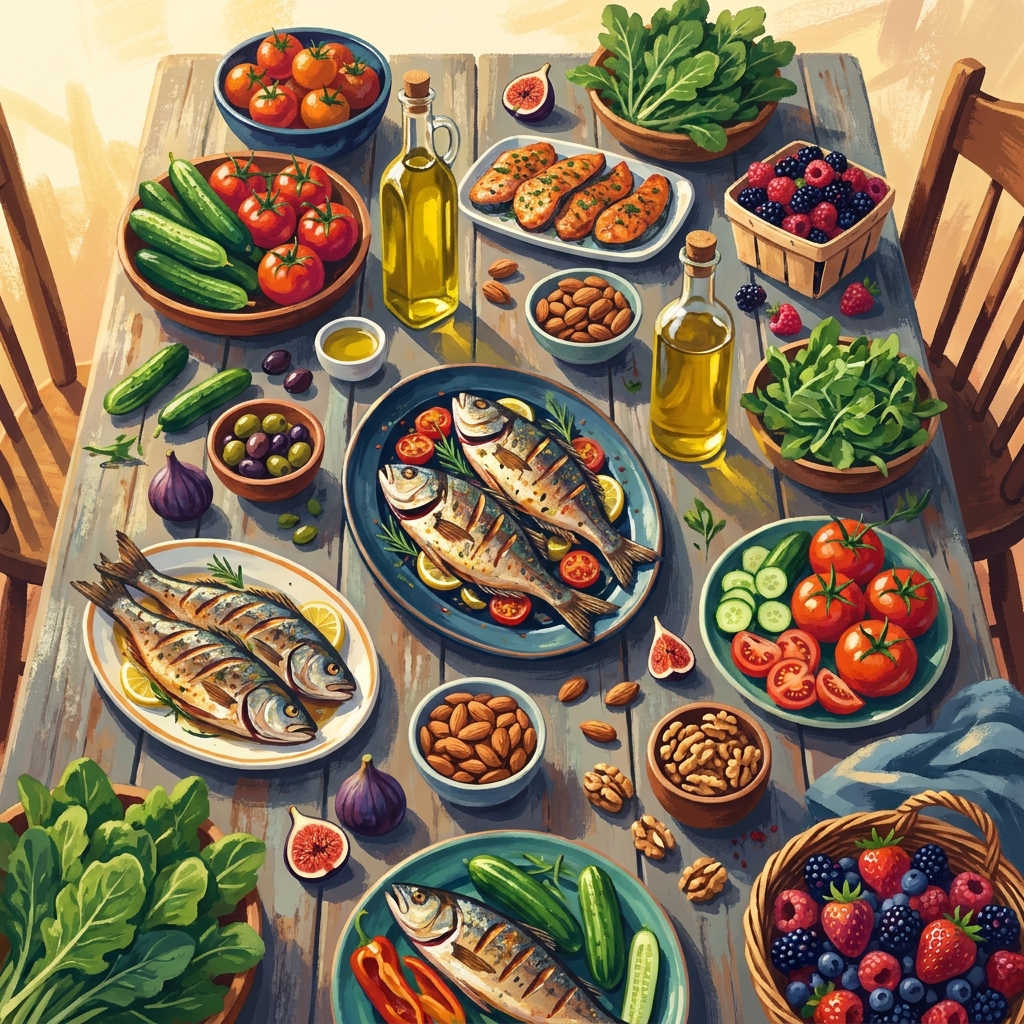
- Leafy greens and colorful vegetables at every meal: spinach, arugula, kale, beets, bell peppers.
- Legumes several times per week: lentils, chickpeas, black beans.
- Whole grains over refined: oats, quinoa, brown rice, whole wheat.
- Fatty fish 2 to 3 times per week: salmon, sardines, mackerel.
- Extra virgin olive oil as the primary fat.
- Nuts and seeds daily, especially walnuts.
The Enhancers: High-Impact Additions to Layer In
- Daily berries: blueberries, strawberries, raspberries.
- Citrus fruits: oranges, grapefruit, lemons.
- Garlic and onions: allicin-rich vasodilators.
- Dark chocolate (70%+ cacao).
- Coffee (2 to 3 cups daily).
- Watermelon: the highest dietary source of L-citrulline.
The Reductions: What to Systematically Decrease
- Ultra-processed foods: the single highest-impact reduction.
- Sugary beverages: sodas, energy drinks, sweetened juices.
- Refined carbohydrates: swap for whole grain equivalents.
- Alcohol: reduce to 1 to 2 drinks maximum on drinking days, or eliminate entirely.
These reductions are not about deprivation. They protect the vascular foundation that determines both sexual and cardiovascular health.
When Diet Is the Foundation, Not the Ceiling: Understanding the Full Spectrum of Men’s Sexual Health
Dietary optimization is the most powerful modifiable foundation for erectile health, but it is not the only variable. ED can carry psychological, hormonal, neurological, and anatomical components that food alone cannot fully resolve.
For some men, the gap between physical capacity and desired confidence involves dimensions beyond vascular health, including concerns about size, appearance, and sexual self-image. The picture is best understood as a spectrum: diet optimizes the vascular and biochemical foundation, medical consultation addresses clinical ED, and for men whose concerns extend to the physical dimensions of sexual confidence, specialized medical expertise exists. Any enhancement decision, whether dietary, pharmaceutical, or procedural, is best made from a position of good vascular health and informed consultation.
Stoller Medical Group: For Men Who Have Built the Foundation and Are Ready to Explore More
For men who have optimized their lifestyle and are seeking additional confidence, Stoller Medical Group offers specialized, non-surgical male enhancement. The practice’s primary service is non-surgical penile girth enhancement using Belefil®, a hyaluronic acid-based dermal filler. The procedure is minimally invasive, performed on an outpatient basis, and completed in under one hour.
The experience credential is substantial: over 15,000 procedures performed under Dr. Roy B. Stoller, a board-certified physician with 25+ years in aesthetic and restorative medicine and five years dedicated specifically to non-surgical male enhancement. Results include up to 1 to 1.5 inches in girth enhancement, 80% to 90% permanent improvement, immediate visible results, and a natural appearance in both flaccid and erect states, with sexual activity resumable within 7 to 10 days.
Procedures start at $7,500, structured by syringe. Most men begin with a minimum of 10 syringes, with the average first procedure involving approximately 15 syringes, and total investment scales based on desired results. The philosophy is safety-first: no surgical cutting, no general anesthesia, hospital-grade sterility protocols, and a staged treatment approach prioritizing proportion, balance, and natural outcomes. Five locations across Manhattan, Long Island, Albany, Pennsylvania, and Minnesota make access practical, and free consultations are available.
Conclusion: An Erection Is a Report Card on Vascular Health, and Diet Controls the Curriculum
Erectile quality is not random. It is a measurable downstream signal of how a man’s vascular system is functioning, and dietary pattern is one of the most powerful inputs he controls. The DII and CDAI frameworks quantify a diet’s inflammatory impact. The Mediterranean and anti-inflammatory patterns carry the strongest evidence base for ED prevention. The nitric oxide pathway is the mechanism connecting food to performance. And ED stands as an early warning signal for cardiovascular disease.
Every dietary improvement that protects erectile function simultaneously protects cardiovascular health, metabolic health, and longevity. The ERECTION and ERECTION 2 trials will deliver the highest-quality evidence within the next one to two years, but the existing data is already compelling enough to act on today. The men who perform at the highest level in every domain treat their body’s systems with the same rigor they apply to their careers. That starts with what goes on the plate.
Take the Next Step: Schedule a Free Consultation With Stoller Medical Group
Men ready to explore non-surgical enhancement options are invited to schedule a free consultation with Stoller Medical Group. A consultation is an information-gathering step, consistent with the research-oriented approach a thoughtful man applies to understanding his dietary options.
Five convenient locations serve the Northeast and Midwest: Manhattan, Long Island, Albany NY, Chadds Ford PA, and Eagan MN. Core confidence-builders remain consistent across all locations: 15,000+ procedures performed, board-certified physician leadership, a non-surgical approach with minimal downtime, and a safety-first philosophy. Procedures start at $7,500, structured by syringe, with most men beginning at a minimum of 10 syringes and averaging 15 syringes in their first procedure; a consultation provides a personalized assessment and investment breakdown.
The best enhancement decisions are made by men who have built a strong vascular foundation. Stoller Medical Group is here for the men who are ready to take the next step.