How to Measure Your PP Without a Ruler: A Practical Guide
Introduction: The Question Most Men Ask Privately
Curiosity about size is nearly universal. At some point, most men have wondered how they measure up, and often the thought arrives at a moment when no measuring tool is anywhere nearby. There is nothing unusual or shameful about that question. What is surprising is how many men reach for the wrong tool when they finally decide to find out.
A standard ruler is actually one of the worst instruments for self-measurement. It is rigid, so it cannot follow the natural curvature of the shaft, which leads to consistent under-measurement. It also cannot wrap around anything, which means it is useless for measuring girth. The search for how to measure your pp without a ruler reflects a legitimate, practical need, and this guide addresses it completely.
This article delivers three things: a clear, step-by-step protocol using ordinary household items; clinically accurate context drawn from peer-reviewed population data; and a straightforward explanation of what the numbers actually mean, including when a professional consultation becomes relevant. The tone throughout is professional, private, and grounded in research, not sensationalism.
One honest caveat: self-measurement is inherently less precise than measurement performed by a clinician. That is why every credible population study uses trained health professionals. Following the correct protocol closely, however, narrows that gap considerably.
Why You Don’t Need a Ruler, and Why That’s Actually Better
A rigid ruler has two fundamental limitations. It cannot conform to curvature, so it consistently reports a shorter length than reality, and it cannot wrap around the shaft to capture circumference at all.
The solution is a flexible tool. Three excellent household alternatives exist:
- A non-stretchy string
- A strip of paper cut from any sheet
- A shoelace
Each of these can follow a curve along the top of the shaft or wrap fully around it. The principle is simple: mark the measurement on the flexible item, then lay it flat against a reference object of known length.
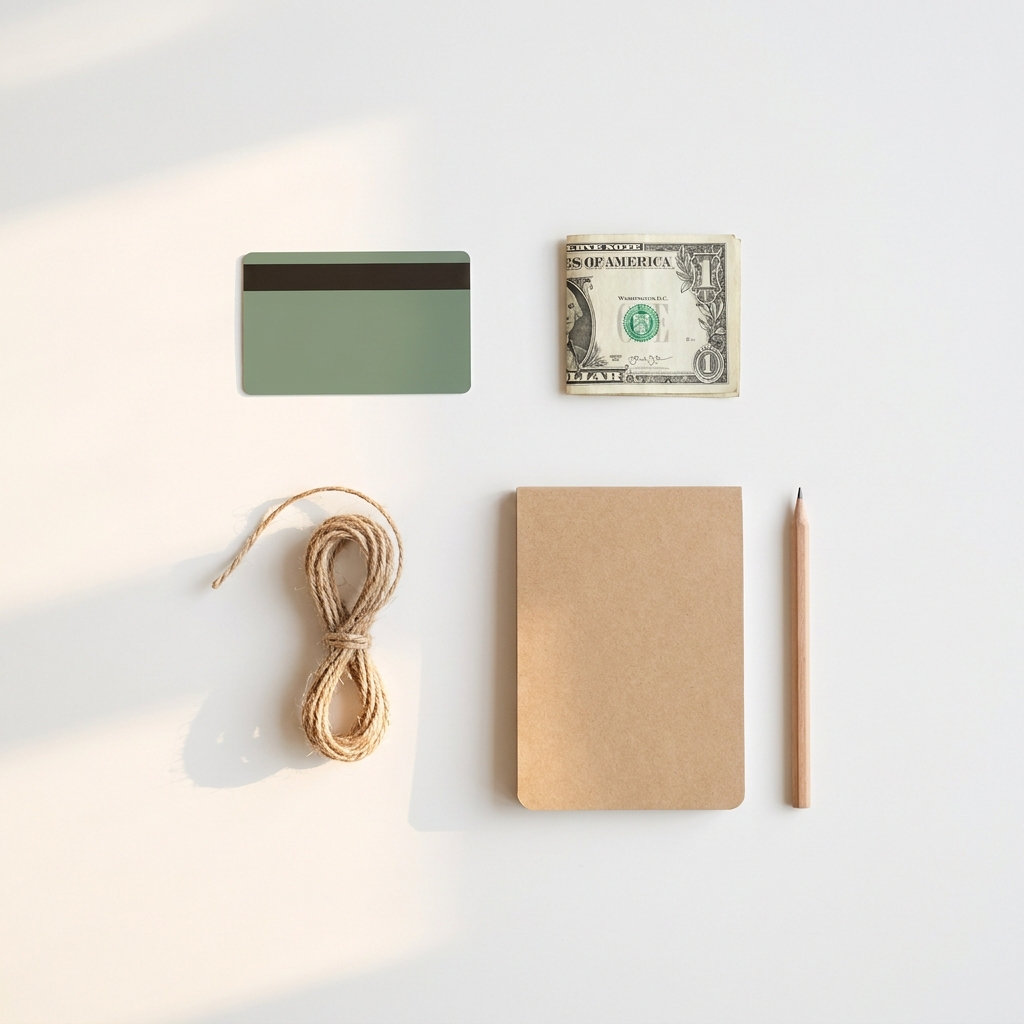
The household reference benchmarks used throughout this guide are:
- U.S. dollar bill: 6.14 inches long
- Credit or debit card (long side): 3.37 inches (two card-lengths equal approximately 6.74 inches)
- Standard Sharpie marker: approximately 5.5 inches
A smartphone can also serve as a reference. Most models have a published screen diagonal, and a quick search for the exact model will confirm its dimensions.
The Clinical Gold Standard: What BPEL Means and Why It Matters
Every credible clinical study uses one protocol: Bone-Pressed Erect Length, or BPEL. This includes the landmark 2015 BJU International systematic review by Veale and colleagues, which measured 15,521 men. Each element of the protocol exists for a reason.
Bone-pressed matters because a pubic fat pad at the base can conceal an inch or more of shaft. Pressing the measuring point firmly against the pubic bone compresses that pad and reveals true anatomical length rather than merely visible length.
Erect is non-negotiable. Flaccid size is a poor predictor of erect size, and any measurement taken while flaccid or semi-erect cannot be meaningfully compared against population data.
Dorsal, meaning the top side, is the standard because measuring from the underside produces an artificially longer number due to the scrotal attachment, invalidating comparison with study data.
Because every population average cited later in this guide is based on BPEL, using the same protocol is essential for an accurate self-comparison. For a clinically reviewed walkthrough of this method, Ro Health’s guide to measuring penis size properly covers the bone-pressed erect length protocol and the most common measurement mistakes in detail.
Step-by-Step: How to Measure Length Without a Ruler
Privacy and a relaxed environment are prerequisites. A full, reliable erection is difficult to achieve when a man feels rushed or observed.
What You’ll Need
Flexible measuring tool (choose one):
- A strip of paper, at least 7 to 8 inches long
- A non-stretchy string
- A shoelace
Reference object (choose one):
- A U.S. dollar bill (6.14 inches)
- A credit or debit card (3.37 inches on the long side)
- A standard Sharpie marker (approximately 5.5 inches)
- A smartphone (look up the exact screen length for the model)
Optional: a fine-tip pen to mark the measurement clearly.
Do NOT use a stretchy fabric measuring tape or an elastic band. These stretch under tension and produce an inflated reading.
The Length Measurement Protocol (5 Steps)
- Achieve a full erection. Partial erections produce shorter, unreliable measurements.
- Position the body. Stand upright or lie flat on the back, keeping the erect penis parallel to the floor or body.
- Place the strip on the dorsal side. Lay the paper strip or string along the top of the shaft, starting at the base. Press the starting end firmly against the pubic bone, fully compressing the fat pad.
- Extend to the tip. Run the strip to the very end of the glans and mark the exact point where the tip ends.
- Compare against the reference. Lay the marked strip flat against the chosen object. Count credit card lengths (3.37 inches each), measure against the dollar bill (6.14 inches), or note where it falls relative to a Sharpie (approximately 5.5 inches), then calculate the total in inches.
Tip: repeat the measurement two or three times and average the results.
Common mistakes: measuring from the underside (adds length), failing to press to the pubic bone (subtracts length), measuring while only semi-erect (subtracts length), and using a stretchy string (adds length).
Step-by-Step: How to Measure Girth (Circumference) Without a Ruler
Girth is measured as circumference: the distance around the thickest part of the erect shaft, typically at mid-shaft. Girth is often more relevant to sexual satisfaction than length, and clinical studies report it as a separate figure.
The Girth Measurement Protocol (4 Steps)
- Achieve a full erection.
- Wrap the strip around the thickest point. Wrap the paper strip or string snugly, but not tightly, around the thickest part of the erect shaft, usually at mid-shaft. Do not compress the tissue.
- Mark the completion point. Mark where the strip completes one full wrap around the shaft.
- Compare against the reference. Lay the marked strip flat against the reference object. A dollar bill (6.14 inches) works well here. Record the measurement in inches.
Tip: avoid measuring at the glans. The head is often narrower than mid-shaft and will produce an inconsistently low reading.
Quick reference: the clinically measured average erect circumference from Veale et al. (2015) is 4.59 inches (11.66 cm), roughly three-quarters of a dollar bill’s length.
Quick-Reference Household Item Cheat Sheet
| Household Item | Known Length | Best Use |
|---|---|---|
| U.S. dollar bill | 6.14 inches | Length and girth |
| Credit/debit card (long side) | 3.37 inches (two = 6.74 in) | Length benchmarking |
| Standard Sharpie marker | approximately 5.5 inches | Single-item length benchmark |
| Smartphone screen | Varies by model | Flat reference surface |
These tools measure the marked string or paper strip after the fact, not the penis directly against the object.
What Your Measurement Actually Means: Population Data in Context
With a number in hand, the next question is what it means relative to the broader male population.
The most authoritative anchor remains Veale et al. (2015), BJU International, in which 15,521 men were measured by health professionals. The key averages:
- Average erect length: 5.17 inches (13.12 cm)
- Average erect circumference: 4.59 inches (11.66 cm)
These figures are reinforced by the 2025 Mostafaei et al. meta-analysis (33 studies, 36,883 patients), which confirmed the numbers globally, with the Americas region showing a slightly higher stretched length of approximately 5.70 inches. Consumer health authorities including Medical News Today (updated May 2025) and Ro Health (updated May 2026) both cite the clinically measured average erect length at roughly 5.1 to 5.5 inches.
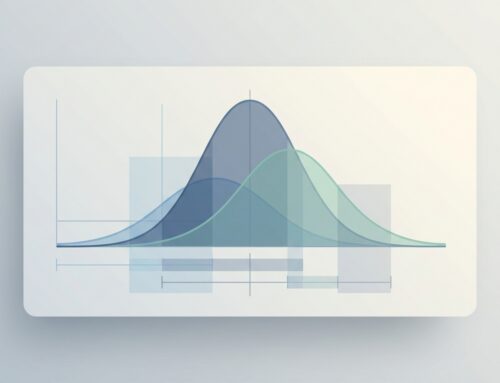
The distribution is a narrow bell curve. Approximately 68% of men measure between 4.6 and 6.0 inches erect. Only about 2.5% exceed 6.9 inches, and about 2.5% fall under 3.7 inches. The gap between the 10th and 90th percentile is roughly 1.3 inches, a remarkably tight range.
One newer, notable data point: the 2023 Belladelli et al. meta-analysis (75 studies, 55,761 men) found that average erect length increased 24% over 29 years, from 4.8 inches in 1992 to 6.0 inches in 2021. Researchers attribute the trend to earlier puberty onset, environmental factors, and shifts in body composition.
A simple percentile reference: a man at 5.5 inches erect is above the median; at 6.0 inches, roughly the 75th percentile; at 6.5 inches, roughly the 90th percentile. For a broader look at how these figures vary across populations, average penile size by country provides additional regional context drawn from the same clinical literature.
The Perception Gap: Why Most Men Think They’re Smaller Than They Are
Most men dramatically overestimate what “average” means. Surveys consistently show men guess the average erect length at 6 to 7 inches, a full inch or more above the clinically measured figure. A 2026 Metro Weekly survey found that 67% of male respondents overestimated their own size when self-reporting. A 2025 PMC narrative review found that men considered above-average lengths to be “common” and perceived themselves as “small” despite measuring within the normal range.
Three Reasons Perception May Be Off
Distortion 1: Pornography. Adult performers are statistical outliers, typically in the 98th to 99th percentile, and camera angles are deliberately selected to exaggerate size further. Repeated exposure quietly resets a man’s sense of “normal.”
Distortion 2: The viewing angle effect. Looking down at one’s own penis creates a foreshortening perspective that makes it appear shorter than it is. This is a basic optical phenomenon, not a reflection of actual size.
Distortion 3: The pubic fat pad. A fat pad at the base can conceal an inch or more of visible shaft. This is precisely why the BPEL protocol presses to the pubic bone: to measure true anatomical length rather than visible length.
Partner satisfaction data closes the loop. The Lever, Frederick & Peplau (2006) survey of 52,031 heterosexual men and women found that 85% of women were satisfied with their partner’s size, while only 55% of men were satisfied with their own. That gap is driven by perception, not reality. Research on penile enhancement and partner perception explores this disconnect further and what it means for men considering their options.
One final note: flaccid size is a poor predictor of erect size. Men who are “growers” often appear small when flaccid but measure within or above average when fully erect, which makes locker-room comparisons meaningless.
When Size Concern Crosses Into Clinical Territory
There is a meaningful difference between normal curiosity and clinically significant concern.
Micropenis is a rare, specific medical diagnosis: a stretched penile length more than 2.5 standard deviations below the mean, approximately 2.95 to 3.67 inches (7.5 to 9.3 cm) when stretched in adults. It affects roughly 0.6% of men.
Small penis anxiety (SPA) and penile dysmorphic disorder (PDD) are distinct from true micropenis. Most men seeking enhancement have physiologically normal penises. Body dysmorphic disorder affects approximately 2.2% of men in the United States, and a subset of those present with penis-specific preoccupation.
This distinction matters because the stakes are real. A 2024 study reported by PsyPost found that men unhappy with genital size and appearance are more likely to experience depression, anxiety, and sexual difficulties. The EAU Guidelines on Sexual and Reproductive Health identify men with BDD, PDD, or SPA as a psychologically vulnerable group who require clinical and psychological support before any augmentation is considered.
The constructive takeaway: if a man measures within the normal range but still experiences persistent dissatisfaction that affects his confidence, relationships, or sexual function, that is a legitimate reason to speak with a qualified clinician, not a sign of vanity. For men within the normal range who are still considering enhancement for personal reasons, clinically reviewed, minimally invasive options now exist.
Non-Surgical Enhancement: What the Clinical Evidence Says
The most current international consensus is the ICSM 2024 consensus (published on PubMed in January 2026), which sets out 20 evidence-based recommendations and stresses comprehensive assessment and careful patient counseling before any treatment. A peer-reviewed Current Urology review (May 2025) surveyed the full landscape: injectable fillers (hyaluronic acid, PMMA, PLA), traction devices, fat grafting, and the Penuma implant.
Injectable dermal fillers are the primary non-surgical option for girth. They are placed beneath the penile skin to enhance girth and volume in a minimally invasive, outpatient setting. A 2025 Translational Andrology and Urology review on complications emphasizes that patient selection, informed consent, and standardized protocols are the keys to safety, which reinforces the importance of choosing an experienced, medically credentialed provider.
All procedures carry some risk, and results vary by individual anatomy and provider expertise. For men in the Northeast and Midwest considering a consultation, the following section outlines what a clinically rigorous, non-surgical approach looks like in practice.
What a Professional Consultation Looks Like: Stoller Medical Group
Stoller Medical Group, operating as Penis Enlargement New York City, is a specialized practice that has performed over 15,000 enlargement procedures, a volume that reflects significant clinical experience.
The primary service is non-surgical penile girth enlargement using Belefil®, a hyaluronic acid-based dermal filler placed beneath the penile skin to enhance girth and volume. The procedure takes less than one hour, is performed on an outpatient basis, and requires no general anesthesia. A detailed overview of how penile filler works explains the mechanism, materials, and what men can expect from the process.
Results profile: immediate visible enhancement; 80 to 90% permanent improvement in girth and volume; results lasting 18 to 24 months; a natural look and feel in both flaccid and erect states; and normal sensation and function maintained.
Recovery: most men are back on their feet in about 10 days, compared with 40 or more days associated with other permanent fillers, and sexual activity can typically resume within 7 to 10 days.
The practice uses a staged treatment approach (multiple sessions rather than a single dramatic procedure), which improves symmetry, reduces risk, and produces smoother outcomes. Notably, the practice does not offer surgical penile lengthening, a deliberate, safety-first decision.
On pricing: the procedure starts at $7,500 and increases depending on desired results. Pricing is by syringe. Most men start with a minimum of 10 syringes, and the average first procedure involves approximately 15 syringes.
The practice operates five locations: Manhattan NY, Long Island NY, Albany NY, Chadds Ford PA, and Eagan MN. Free consultations are available, and discretion and confidentiality are core values.
Frequently Asked Questions
Can a man measure his penis without a ruler?
Yes. A paper strip, non-stretchy string, or shoelace combined with a dollar bill or credit card as a reference gives a reliable measurement when used with the BPEL protocol.
What is the average penis size?
Based on Veale et al. (2015), the most-cited clinical study, average erect length is 5.17 inches and average erect circumference is 4.59 inches, both measured by health professionals.
Does flaccid size predict erect size?
No. Flaccid size is a poor predictor. Men who are “growers” can appear significantly smaller flaccid than erect. Measuring erect is the only way to produce a meaningful comparison.
What if a measurement falls below average?
Most men who believe they are “too small” actually measure within the normal range. If persistent dissatisfaction is affecting quality of life, a consultation with a qualified clinician is the appropriate next step.
What is micropenis?
A rare clinical diagnosis defined as a stretched penile length more than 2.5 standard deviations below the mean, approximately 2.95 to 3.67 inches stretched in adults. It affects roughly 0.6% of men.
Is non-surgical girth enhancement safe?
When performed by an experienced, medically credentialed provider using medical-grade materials and standardized protocols, injectable filler procedures have a well-documented safety profile. The ICSM 2024 consensus stresses comprehensive assessment and counseling before any treatment.
How much does a girth enhancement procedure cost?
At Stoller Medical Group, procedures start at $7,500 and increase depending on desired results. Pricing is by syringe; most men begin with a minimum of 10 syringes, with the average first procedure using approximately 15 syringes.
How does a man know if enhancement is right for him?
A free consultation with a qualified clinician is the best starting point. It includes a comprehensive assessment, realistic goal-setting, and a full informed consent process, with no obligation to proceed.
Conclusion: The Number Is Just a Starting Point
Measuring without a ruler is entirely achievable with a paper strip or string and a household reference object. The BPEL protocol is the only method that produces clinically comparable results, and the vast majority of men fall within a narrow, normal range.
The perception gap is the real story. The clinical average is 5.17 inches erect, significantly lower than most men believe. The bell curve is tight, and most men who feel “below average” simply are not.
For some men, the number alone is not enough. Persistent dissatisfaction is real, it carries documented mental health consequences, and it deserves a clinical response rather than dismissal. Just as men consult physicians for other health concerns, speaking with a qualified specialist about size-related concerns is a legitimate, private, and increasingly common step.
Whether the measurement confirms what a man suspected or offers unexpected reassurance, he now has accurate data, clinical context, and a clear path forward.
Ready to Move Beyond the Measurement? Schedule a Free Consultation
For men who have measured, understand their number, and want to explore their options with a qualified clinician, a consultation is the natural next step.
Stoller Medical Group has performed over 15,000 procedures across five locations in New York, Pennsylvania, and Minnesota, and is led by Dr. Roy B. Stoller, a board-certified physician with more than 25 years in aesthetic and restorative medicine and five years dedicated specifically to non-surgical male enhancement.
The free consultation carries no cost, no obligation, and full confidentiality. The practice prioritizes natural-looking results, patient safety, and realistic expectations through a staged, conservative treatment philosophy rather than dramatic single-session changes. Procedures start at $7,500 and increase depending on desired results, with pricing by syringe (minimum 10 syringes; average first procedure approximately 15 syringes). Transparent pricing is reviewed in full during the consultation.
Schedule a free, confidential consultation at one of five locations: Manhattan, Long Island, Albany, Chadds Ford PA, or Eagan MN.
Have questions first? Learn more about the Belefil® girth enhancement procedure and what to expect at a first visit.