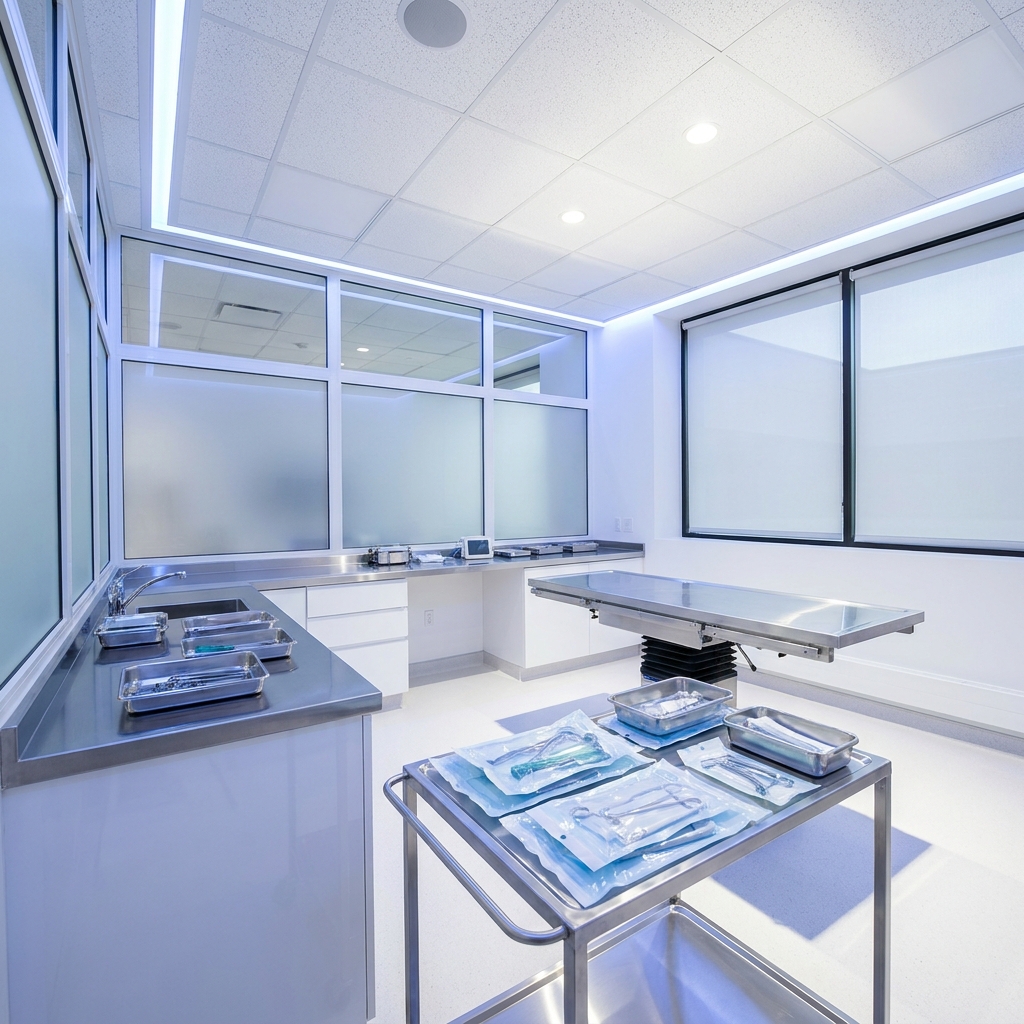
Male Enhancement Procedure Sterile Technique: The Hospital-Grade Infection Prevention Standard Explained
Introduction: Why Sterile Technique Should Be Your First Question, Not an Afterthought
Most men researching a male enhancement procedure ask predictable questions. How much does it cost? How long is the recovery? What kind of results can I expect? These are reasonable questions. But one question matters far more than any of them, and almost no one asks it: “What is your sterile protocol?”
This omission carries real consequences. Surgical site infections (SSIs) account for roughly 20% of all healthcare-associated infections, and in the context of penile augmentation, the outcomes of a preventable infection range from painful abscesses and disfiguring scar tissue to systemic sepsis and, in documented cases, death.
The uncomfortable truth is that hospital-grade sterile technique is not a universal standard across providers. It is a discipline that must be verified, understood, and demanded by the patient. A man who understands what proper sterile technique looks like is fundamentally safer than one who does not, because he can identify which providers meet the standard and which only claim to.
This article explains the full picture: the difference between aseptic protocols for hyaluronic acid (HA) filler injections and surgical implants, the No-Touch Technique, the hidden danger of biofilm, why chlorhexidine outperforms older antiseptics, and a practical due diligence checklist. Throughout, the hospital-grade sterility commitment of Stoller Medical Group serves as the benchmark for what responsible practice should look like.
Understanding Sterile Technique: What “Hospital-Grade” Actually Means
The word “sterile” is often used loosely. In clinical terms, it has a precise meaning. Sterile technique refers to the complete elimination of all microorganisms from instruments, surfaces, and the procedural field. This is distinct from “clean” or “sanitary,” which only reduces bacterial load rather than eliminating it.
The overarching framework is aseptic technique, a defined set of practices designed to prevent contamination of sterile areas during invasive procedures. Within this framework, there are two tiers. Medical asepsis is used in some basic injection settings. Surgical asepsis is the rigorous, no-compromise standard used in operating rooms. Male enhancement procedures, even non-surgical ones involving injectable fillers, demand the higher surgical asepsis standard because they breach the skin barrier and introduce material into deep tissue.
This is not optional or aspirational. CDC guidelines for SSI prevention specify alcohol-based antiseptic agents, sterile draping, sterile gloves, and strict procedural discipline as foundational requirements. The reason “hospital-grade” is the correct benchmark even for outpatient settings is straightforward: research shows minor outpatient surgical procedures carry a 2% to 6% infection rate when sterile standards are not rigorously maintained.
The practical takeaway for any prospective patient is clear. A provider performing male enhancement procedures who cannot articulate their sterile protocol in detail is a provider to avoid.
Two Procedures, Two Sterile Protocols: HA Filler Injections vs. Surgical Implants
Male enhancement broadly divides into two categories: non-surgical procedures (HA filler injections, fat transfer) and surgical procedures (penile prosthesis implantation). Each demands a distinct but equally rigorous sterile protocol.
Conflating these two categories is a common and dangerous patient misconception. The infection pathways, the specific risks, and the prevention strategies differ meaningfully between them. Understanding this distinction is the foundation for everything that follows.
Aseptic Protocol for HA Filler-Based Penile Girth Enhancement
For HA filler procedures, the standard of preparation is far more extensive than most patients anticipate. Peer-reviewed literature published in Cureus in May 2025 establishes that the procedural field must be prepared under strict aseptic conditions, extending from the umbilicus all the way to the knees. This broad sterile zone dramatically reduces the chance of bacterial migration into the treatment area.
The protocol includes several non-negotiable elements:
- Sterile draping that limits skin exposure to only the treatment area while protecting the surrounding field.
- Sterile gloves, sterile needles, and single-use instruments. Reuse of any component is an unacceptable breach.
- Antiseptic skin preparation with a chlorhexidine-alcohol solution applied to the treatment area, a step that cannot be skipped or abbreviated.
- Prophylactic antibiotic administration within one hour before the procedure begins, not afterward.
When these steps fail, the consequences are serious. Infection associated with HA injection can require broad-spectrum antibiotics and surgical incision and drainage if an abscess forms. Prevention through strict aseptic technique is the only reliable safeguard. This is precisely the standard Stoller Medical Group applies to its Belefil® filler procedures: comprehensive field preparation, evidence-based antisepsis, and single-use sterile instrumentation.
Surgical Sterile Protocol: What Happens in the OR During Penile Implant Procedures
Surgical implant procedures demand an even higher-complexity sterile environment: a dedicated operating room (often with laminar airflow), full surgical draping, and sterile gowns and gloves for all personnel.
One critical detail rarely discussed in patient-facing content is the dual mayo stand setup. One stand is used during the initial incision phase, and a second, entirely separate sterile stand is reserved exclusively for implant insertion. After the initial incision, all instruments that contacted the patient’s skin are considered contaminated and discarded before the implant phase begins.
Evidence further supports minimizing operating room traffic, because every entry and exit introduces contamination risk. The use of antibiotic-impregnated implants has produced dramatic results: infection rates at two months drop from 1.59% (non-coated) to 0.28% (antibiotic-coated), and at seven years from 2.5% to 1.1%. Overall, penile implant infection rates range from 1% to 3%, with breaches in sterile protocol among the primary surgery-related risk factors.
Stoller Medical Group’s non-surgical, filler-based approach eliminates implant-specific infection vectors entirely while maintaining the same rigorous aseptic discipline.
The No-Touch Technique (NTT): The Gold Standard Most Patients Have Never Heard Of
Pioneered by Dr. Eid in 2005, the No-Touch Technique (NTT) is designed to eliminate all direct contact between the prosthesis, surgical instruments, gloves, and patient skin. The protocol unfolds in three phases:
- The initial incision is made using standard sterile instruments.
- After the incision, all instruments are discarded and gloves that touched the skin are changed.
- A fresh sterile drape is applied over the operative field before any implant contact occurs.
The results are striking. In experienced hands, NTT reduces peri-prosthetic infection risk to below 1%. The technique frequently incorporates an Iodoform drape that exposes only the penis and scrotum while covering all surrounding skin, minimizing the surface area available for bacterial transfer.
For patients, NTT functions as a litmus test. The question “Does your team use the No-Touch Technique, and how does your protocol minimize contact with the sterile field?” immediately reveals a provider’s level of clinical sophistication. While NTT was developed for implant surgery, its underlying principle of minimizing all unnecessary contact with the sterile field applies equally to filler injection protocols. A 2026 narrative review in the International Journal of Impotence Research confirms NTT as among the most significant intraoperative innovations for infection reduction.
Biofilm Formation: The Hidden Infection Risk in Filler-Associated Procedures
A biofilm is a structured community of bacteria that adheres to a surface, including filler material, and encases itself in a protective matrix. This matrix shields the bacteria from both antibiotics and the body’s immune system.
Biofilm is particularly dangerous in filler-based procedures because HA filler creates a substrate to which bacteria can adhere. Once a biofilm establishes, standard antibiotic treatment may be insufficient. The clinical evidence is sobering: HA fillers can cause severe infections including fatal sepsis after penile augmentation, with abscesses and sepsis resulting from filler biofilms that protect bacteria from antibiotic bactericides.
What makes biofilm especially insidious is its delayed presentation. Symptoms often appear weeks to months after the procedure as chronic inflammation, nodule formation, or recurrent abscess, and can be mistaken for a benign filler reaction rather than infection. The primary defense is strict aseptic technique at the moment of injection, because once bacteria are introduced, biofilm formation can begin within hours.
Treatment is difficult and may require complete filler removal, prolonged antibiotic courses, and surgical drainage. These are entirely preventable outcomes. Patient selection matters here as well: individuals with active skin infections, compromised immunity, or uncontrolled diabetes face elevated biofilm risk. Stoller Medical Group’s pre-procedure screening and aseptic injection protocol together form a multi-layered defense against this threat.
Chlorhexidine-Alcohol vs. Povidone-Iodine: Why Antiseptic Choice Is Not Arbitrary
The choice of antiseptic is an evidence-based clinical decision, not a matter of provider preference.
Chlorhexidine-alcohol is a combination antiseptic providing both immediate bactericidal action (from the alcohol) and persistent residual activity (from the chlorhexidine) that continues killing bacteria after application. Povidone-iodine, by contrast, is a traditional antiseptic with broad-spectrum activity but limited residual effect and reduced efficacy in the presence of organic material such as blood and tissue fluid.
The clinical evidence is decisive. A 2-minute chlorhexidine scrub was demonstrated superior to a 10-minute povidone-iodine scrub for eradicating skin flora before genitourinary prosthetic device implantation. WHO, CDC, and ICM guidelines all endorse alcohol-based antiseptic agents, including chlorhexidine-alcohol, for intraoperative skin preparation.
The practical implication is direct: a provider using povidone-iodine as their primary antiseptic for male enhancement procedures is not following current evidence-based guidelines. Application protocol matters as well. Chlorhexidine-alcohol must be applied with appropriate contact time and allowed to fully dry before any injection or incision; shortcuts negate the benefit. The patient question here is simple: “What antiseptic do you use for skin preparation, and why?”
The Antibiotic Protocol: What Evidence-Based Prophylaxis Actually Looks Like
The purpose of prophylactic antibiotics is to achieve therapeutic tissue concentrations at the moment of potential bacterial introduction, not to treat infection after the fact.
The evidence-based timing standard requires that prophylactic antimicrobials be administered within one hour before incision or injection (two hours for vancomycin or fluoroquinolones). A common misconception is that postoperative antibiotics provide added protection. They do not. Postoperative antibiotics have not been consistently shown to reduce infection rates and may promote antibiotic resistance. The protective window is preoperative, and prophylaxis should be discontinued at wound closure.
For longer procedures, a 2024 systematic review found lower SSI risk with intraoperative antibiotic redosing versus no redosing (OR: 0.65, 95% CI: 0.45 to 0.94), with the clearest benefit in procedures lasting four or more hours. The field is also evolving in response to emerging pathogens: multidrug-resistant organisms and fungal infections (found in 12% of penile prosthesis infections) are reshaping prophylaxis protocols, requiring tailored regimens rather than one-size-fits-all approaches.
For HA filler patients, pre-procedure antibiotic administration is a standard component of responsible protocol, not an optional add-on. Stoller Medical Group’s antibiotic protocol aligns with current CDC and AUA evidence-based guidelines.
Patient-Side Preparation: The Patient’s Role in the Sterile Chain
Sterile technique is not solely the provider’s responsibility. The patient is an active link in the infection prevention chain.
- Preoperative chlorhexidine showering: Patients are typically instructed to shower with chlorhexidine gluconate solution the night before and the morning of the procedure to reduce baseline skin bacterial load.
- Hair removal: If required, this should be done with clippers, never razors, which create micro-abrasions that increase infection risk, and performed as close to the procedure time as possible.
- Glycemic control: Diabetic patients face significantly elevated risk. A preoperative HbA1c below 8.5% is recommended; above this threshold, infection risk rises sharply.
- Smoking cessation: Smoking impairs wound healing and immune response and is now a formal component of perioperative infection prevention.
- Alcohol abstinence: Alcohol affects immune function and wound healing; guidelines recommend abstinence in the days surrounding any invasive procedure.
- Active infection: Any active skin, urinary, or systemic infection is an absolute contraindication and must be fully resolved before proceeding.
These are not bureaucratic hurdles. They are evidence-based steps that directly reduce a patient’s personal infection risk. Stoller Medical Group’s pre-procedure consultation includes a thorough review of all of these requirements.
The Consequences of Non-Sterile Male Enhancement: What Happens When Protocols Fail
Serious complications from male enhancement procedures almost always result from unqualified practitioners using inappropriate substances or failing to maintain sterile conditions. The documented outcomes are severe:
- Sclerosing lipogranuloma: A severe inflammatory reaction caused by unapproved oil-based substances injected in non-sterile conditions, requiring tissue excision and skin transplantation, as documented in retrospective case series in the International Journal of Impotence Research (2025).
- Abscess formation: A localized collection of pus requiring surgical incision and drainage, prolonged antibiotics, and potential filler removal, capable of permanently altering penile anatomy.
- Sepsis: Systemic infection that can progress to organ failure and death, documented as a fatal outcome in HA filler cases where biofilm-associated infection was not controlled.
- Fournier’s gangrene: Necrotizing fasciitis of the genitalia, a life-threatening emergency requiring aggressive surgical debridement.
Providers operating outside licensed medical facilities, using non-medical-grade substances, or working in non-sterile environments represent the highest-risk category. These are not theoretical risks; they are documented outcomes in peer-reviewed literature. This is precisely why patient due diligence is rational risk management, not paranoia.
The Informed Patient’s Sterile Technique Due Diligence Checklist
Every man should apply this checklist before choosing a provider:
- Facility standard: “Is this procedure performed in a licensed medical facility with a dedicated sterile procedural room?” (Not a spa, hotel suite, or mobile unit.)
- Antiseptic protocol: “What antiseptic do you use for skin preparation?” (Correct answer: chlorhexidine-alcohol.)
- Antibiotic prophylaxis: “Do you administer prophylactic antibiotics, and what is the timing?” (Correct answer: within one hour before the procedure.)
- Sterile field extent: “How do you prepare and drape the field?” (For HA filler: umbilicus to knees.)
- No-Touch Technique awareness: “Are you familiar with the No-Touch Technique?”
- Instrument sterility: “Are all instruments single-use or sterilized between patients?” (Single-use needles and cannulas are non-negotiable.)
- Patient screening: “What conditions would disqualify me from having this procedure today?”
- Postoperative wound care: “What is your wound care protocol?” (Standard: sterile gauze with compression dressing, incision protected for 24 to 48 hours.)
- Complication management: “If I develop signs of infection, what is your response protocol?”
- Provider credentials: “What is your training and experience specifically in male enhancement?” (Volume matters: a provider with 15,000+ procedures has a fundamentally different risk profile than one with 50.)
A provider who welcomes these questions is demonstrating the transparency that defines medically rigorous practice. Men who want to explore these questions in person can begin with a penis enlargement consultation to assess provider standards before committing to any procedure.
Why Stoller Medical Group’s Sterile Standard Sets the Benchmark
Stoller Medical Group embodies the standards described throughout this article. With more than 15,000 procedures performed, sterile protocol is not improvised; it is a refined, systematized clinical process with documented outcomes.
Procedures take place in licensed medical facilities across five locations, each equipped for sterile invasive procedures, never in aesthetic spas or non-medical settings. Founder Dr. Roy B. Stoller brings more than 25 years of aesthetic and restorative medicine experience and five years dedicated specifically to non-surgical male enhancement, a depth of expertise that informs every aspect of the practice’s protocol.
The HA filler-specific sterile protocol includes comprehensive field preparation from umbilicus to knees, chlorhexidine-alcohol antisepsis, pre-procedure antibiotic prophylaxis, single-use sterile instruments, and sterile draping, all aligned with current CDC, WHO, and peer-reviewed literature standards. By using Belefil® HA filler rather than surgical implants, the practice eliminates implant-associated infection vectors entirely while maintaining full aseptic discipline.
The results reflect this precision: a 10-day recovery timeline (compared to 40+ days with other permanent fillers), consistent with the cleanliness and accuracy of the approach. For context on what a typical penis enlargement recovery time looks like across different methods, the difference is significant. Patient screening assesses active infections, glycemic status, medications, and other risk factors before treatment, and postoperative care follows established SSI prevention guidelines. The practice’s willingness to discuss these protocols openly is itself a differentiator in a field where many providers deflect such questions.
Understanding the Investment: Pricing, Value, and What the Cost Covers
The cost of a male enhancement procedure at a medically rigorous facility reflects the infrastructure, expertise, and safety protocols that protect the patient, not just the filler material itself.
At Stoller Medical Group, procedures start at $7,500, with the final cost varying based on desired results and the number of syringes required. Pricing is calculated per syringe of Belefil® HA filler. Most men begin with a minimum of 10 syringes, and the average first procedure involves approximately 15 syringes.
That investment covers the sterile infrastructure, physician expertise, pre-procedure screening, prophylactic antibiotics, sterile instruments, and postoperative wound care. Providers offering dramatically lower pricing are almost invariably cutting costs somewhere in the safety chain. The false economy is stark: the cost of treating a serious infection, including hospitalization, IV antibiotics, surgical drainage, and corrective procedures, vastly exceeds any savings from choosing a discount provider.
Free consultations are available at all five locations, allowing prospective patients to discuss goals, anatomy, and the appropriate number of syringes before any financial commitment. The staged treatment approach lets patients achieve results incrementally, with each stage evaluated for safety and symmetry before proceeding.
Conclusion: Sterile Technique Is Not a Feature, It Is the Foundation
In male enhancement procedures, sterile technique is not a premium add-on or a marketing claim. It is the clinical foundation upon which every safe outcome is built.
This article has covered the essential distinctions: HA filler aseptic protocol versus surgical implant sterile protocol, the No-Touch Technique, biofilm risk, the superiority of chlorhexidine-alcohol, evidence-based antibiotic timing, and the patient’s own role in preparation. Men who understand these protocols are not merely better consumers; they are active participants in their own safety, capable of distinguishing providers who meet the standard from those who do not.
Choosing this kind of procedure requires trust, and trust must be earned through demonstrated clinical rigor, not slogans. With 15,000+ procedures, hospital-grade sterile protocols, board-certified physician leadership, and a transparent approach to patient education, Stoller Medical Group represents the standard against which other providers should be measured. As the field evolves with emerging pathogens and advancing techniques, providers committed to evidence-based penile enhancement safety protocols will continue to deliver the safest outcomes.
Ready to Speak With a Specialist? Schedule Your Free Consultation
Men who are ready to take the next step are invited to schedule a free consultation at any of Stoller Medical Group’s five locations: Manhattan, Long Island, Albany, Pennsylvania, and Minnesota.
The consultation is a no-pressure opportunity to ask the questions from the due diligence checklist, discuss individual anatomy and goals, and receive a personalized treatment plan with no obligation. Dr. Stoller and the clinical team welcome detailed questions about sterile protocols, procedure specifics, and safety standards. Transparency is a core practice value.
With pricing starting at $7,500 and following a per-syringe model, the consultation is also the appropriate setting to determine the right number of syringes for a patient’s specific goals. All consultations are conducted with complete confidentiality in a professional medical environment, and the five-location footprint across New York, Pennsylvania, and Minnesota ensures accessibility across the Northeast and Midwest.
The most important decision in any male enhancement procedure is not which provider offers the lowest price. It is which provider a patient can trust with his health. Stoller Medical Group invites prospective patients to see the difference that clinical rigor makes.