
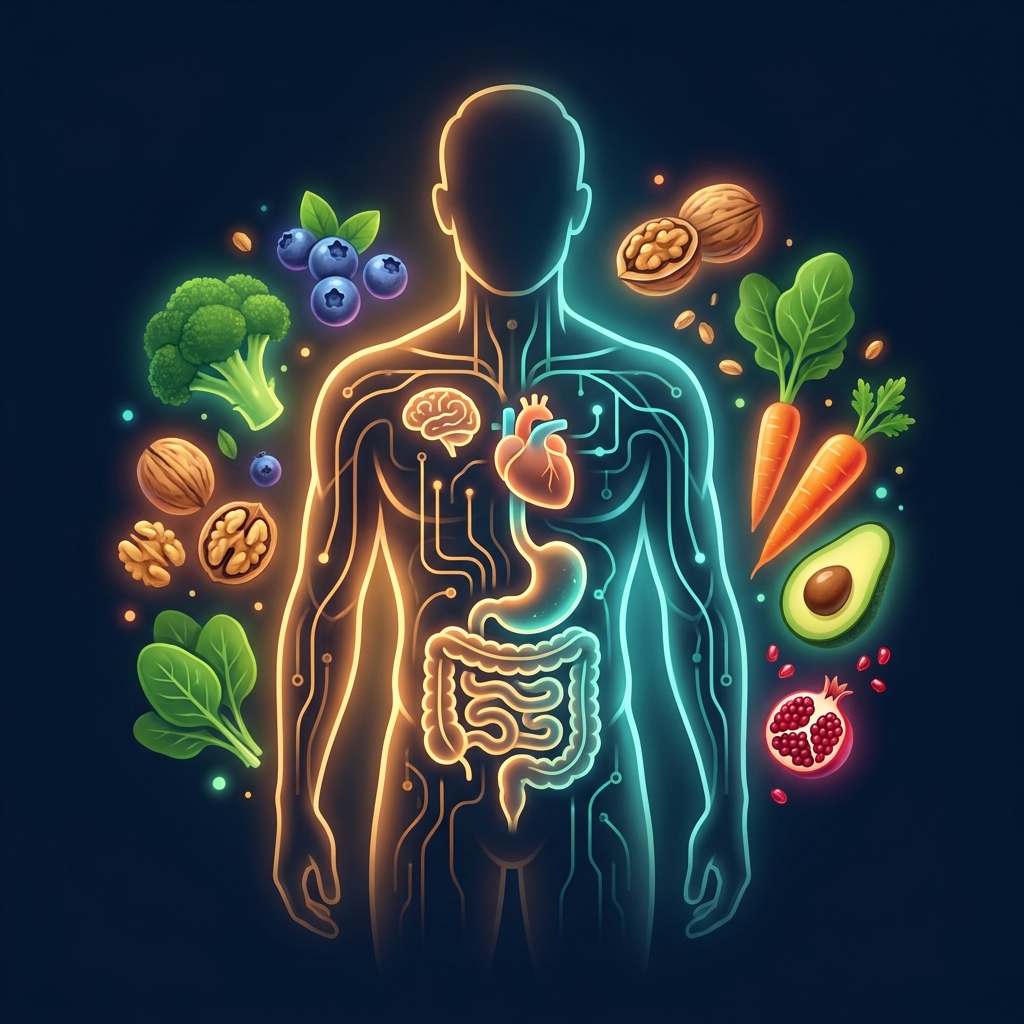
Diet to Help ED: The Gut-Hormone-Erection Axis Explained
Introduction: Why Your Fork May Matter More Than You Think
Erectile dysfunction affects an estimated 30 million men in the United States, and roughly 1 in 4 men experience difficulties with erections. That figure includes about 26% of men aged 18 to 34, which dismantles the persistent myth that ED is exclusively an older man’s problem. For high-achieving professionals accustomed to control and performance in every other domain of life, this is often the first health signal that refuses to respond to willpower alone.
Most content on diet and ED hands men a grocery list: spinach, watermelon, dark chocolate. Useful, but incomplete. This article takes a different approach by offering a biological framework: three interconnected systems that diet directly governs, and through which food either supports or sabotages erectile function.
Those three pathways structure everything that follows: (1) the gut microbiome-testosterone axis, (2) the cortisol-psychogenic ED link, and (3) the endothelial health continuum. Understanding how these systems interact does more than justify a food list. It explains why certain dietary patterns work and gives men the mechanism-level reasoning to sustain change.
A note on honesty: not all dietary interventions carry equal scientific weight. This article distinguishes clearly between what the research strongly supports and what remains preliminary. What is beyond dispute is this: dietary change is among the least costly and most broadly beneficial interventions available for ED, and it frequently addresses the underlying conditions that cause it in the first place.
Understanding ED as a Systems Problem, Not a Symptom
ED is rarely a standalone performance failure. It is more accurately understood as a clinical signal, with the body reporting dysfunction in one or more interconnected biological systems.
There are three primary categories of ED causation: vascular/endothelial (the most common), hormonal/metabolic, and psychogenic. In practice, most cases involve overlapping causes rather than a single culprit.
One of the most important insights in modern men’s health is that ED often functions as a cardiovascular early-warning signal, preceding diagnosable heart disease by three to five years. The reason is anatomical: the penile arteries measure roughly 1 to 2mm in diameter, while the coronary arteries measure 3 to 4mm. The smaller vessels show the effects of endothelial dysfunction sooner, meaning ED can be the first visible symptom of a broader vascular problem. Research in Scientific Reports confirms that ED and cardiovascular disease share the same pathways: endothelial dysfunction, atherosclerosis, inflammation, obesity, hypertension, metabolic syndrome, and diabetes.
The diabetes connection is especially stark. Up to 75% of men with long-standing diabetes mellitus experience ED, establishing insulin resistance and glycemic control as central dietary targets.
This systems framing matters because it changes the strategy. A diet that simultaneously supports endothelial health, hormonal balance, and stress physiology is far more powerful than any single superfood. The goal is not to find a magic ingredient; the goal is to correct the terrain.
Pathway 1: The Gut Microbiome-Testosterone Axis
This is the most underreported pathway in mainstream ED content and the mechanism that nearly every “top foods” article ignores entirely.
The gut microbiome is a primary regulator of systemic inflammation. When the balance of gut bacteria is disrupted (a state called dysbiosis), harmful bacteria proliferate and release endotoxins known as lipopolysaccharides into circulation. Research from Rupa Health in 2025 shows that high levels of proinflammatory gut bacteria release these endotoxins, which directly suppress testosterone production in the Leydig cells of the testes.
The downstream consequences compound quickly. Suppressed testosterone leads to reduced libido, fewer nocturnal erections, and diminished oxygenation of penile tissue, all of which increase ED risk. Zinc deficiency, common in men with poor dietary quality, worsens the picture further; 2024 data links low zinc to reduced testosterone and ED.
The practical takeaway is that hormonal health begins in the gut, and diet is the primary lever.
Gut-Supportive Dietary Strategies for Hormonal Health
- High-fiber, plant-diverse diets feed beneficial bacteria such as Lactobacillus and Bifidobacterium, which outcompete proinflammatory species and lower endotoxin load.
- Fermented foods (yogurt, kefir, kimchi, sauerkraut) introduce live beneficial bacteria and have been shown in clinical research to reduce systemic inflammatory markers.
- Polyphenol-rich foods (berries, olive oil, dark chocolate, green tea) act as prebiotics, selectively feeding beneficial microbiota while delivering direct antioxidant benefits.
- Foods to minimize: ultra-processed foods, refined sugars, and artificial sweeteners reduce microbiome diversity and expand proinflammatory bacterial populations.
- Zinc-rich foods (oysters, pumpkin seeds, beef, legumes) support testosterone production and should be prioritized in men with dietary gaps.
For the professional reader, the message is straightforward: gut optimization is not about the latest supplement trend. It is about consistent dietary quality sustained over time.
Pathway 2: The Cortisol-Psychogenic ED Link
Psychogenic factors account for roughly 10 to 20% of ED cases, but most cases involve both physical and psychological components. That means stress physiology is relevant to nearly every man dealing with ED.
The mechanism is direct. Chronic psychological stress elevates cortisol and sympathetic nervous system activity, which suppresses nitric oxide synthase (NOS) expression. NOS is the enzyme responsible for producing the nitric oxide that triggers an erection. Suppress the enzyme, and the biochemistry of arousal falters. Research published in PMC in 2023 found that men engaged in structured stress management showed significant reductions in perceived stress and improved erectile function compared to men treated with tadalafil alone.
Diet influences this loop directly. Pro-inflammatory diets elevate baseline cortisol, while anti-inflammatory dietary patterns measurably lower inflammatory biomarkers such as CRP and IL-6 that amplify the stress response. The Dietary Inflammatory Index (DII) captures this relationship; NHANES data published in Frontiers in Nutrition shows a link between pro-inflammatory diet scores and worse ED outcomes.
For the high-achieving professional under chronic occupational pressure, this is significant. The same dietary patterns that protect the heart also buffer the physiological effects of stress, making nutrition a dual-purpose intervention.
Anti-Inflammatory and Stress-Buffering Dietary Strategies
- Omega-3 fatty acids (fatty fish, walnuts, flaxseed, chia): reduce systemic inflammation, improve endothelial function, and support healthy blood flow to penile tissue.
- Magnesium-rich foods (dark leafy greens, nuts, seeds, legumes, dark chocolate): magnesium is a cofactor in over 300 enzymatic reactions, including cortisol regulation and testosterone synthesis. Deficiency is common among high-stress men.
- Flavonoid-rich foods (berries, citrus, dark chocolate): men consuming the most flavonoids had a 9 to 11% lower incidence of ED, per data from the American Journal of Clinical Nutrition (2016). Combined with exercise, risk reduction rose to 21%.
- Anti-inflammatory compounds (turmeric/curcumin, ginger): emerging evidence supports their role in lowering inflammation relevant to both stress and vascular health.
- Foods that worsen cortisol: refined carbohydrates cause blood sugar spikes and crashes that trigger cortisol release; excess caffeine without adequate nutrition amplifies sympathetic activation.
There is also a sleep-diet-testosterone triangle worth noting: poor dietary quality disrupts sleep architecture, and testosterone is produced primarily during deep sleep. Diet can either feed that vicious cycle or interrupt it.
Pathway 3: The Endothelial Health Continuum
The endothelium is the inner lining of the blood vessels. When healthy, it produces nitric oxide on demand, dilating vessels and enabling erection. When damaged, it cannot, and no amount of arousal fully compensates.
The core biochemistry works as follows: sexual arousal triggers NOS activity, nitric oxide is released, the smooth muscle in penile arteries relaxes, blood flows in, and an erection occurs. Diet directly governs both NOS activity and the availability of the raw materials from which nitric oxide is built.
Two dietary inputs matter most. L-arginine and L-citrulline serve as direct precursors to nitric oxide; 2025 data identifies poultry, fish, nuts, and dairy as L-arginine sources and watermelon as a rich source of L-citrulline. Separately, the nitrate-to-nitrite-to-nitric oxide pathway allows leafy greens (spinach, arugula, lettuce, radish) to raise nitric oxide via a distinct route; Cleveland Clinic data from 2025 confirms that nitrate-rich greens reduce blood pressure and inflammation.
Endothelial dysfunction is tightly linked to insulin resistance. Chronically elevated blood glucose and hyperinsulinemia glycate endothelial cells, reducing their capacity to produce nitric oxide. This is precisely why glycemic control sits at the center of ED prevention, and why ED so often functions as a metabolic early-warning signal years before a cardiac event.
Nitric Oxide-Boosting and Endothelial-Protective Foods
- Leafy greens (spinach, arugula, kale, Swiss chard): the highest dietary nitrate content, supporting nitric oxide production and lower blood pressure.
- Beets and beet juice: among the most concentrated nitrate sources, with clinical evidence for acute blood pressure reduction.
- Watermelon (L-citrulline): citrulline converts to arginine in the kidneys, providing a more sustained nitric oxide effect than direct arginine supplementation.
- Antioxidant-rich fruits (berries, pomegranate, citrus): antioxidants protect nitric oxide from degradation by free radicals. Cleveland Clinic data indicates men eating antioxidant-rich fruit are 19% less likely to experience ED.
- Olive oil and healthy fats: monounsaturated fats reduce LDL oxidation, a key driver of endothelial damage.
- Calcium, phosphorus, and potassium: NHANES data published in PMC in 2024 links the highest tertile of calcium intake to 34% lower ED risk and potassium intake to a 35% reduced risk.
Evidence Ranking: Which Dietary Patterns Actually Work for ED?
Not all dietary advice deserves equal confidence. The following comparison stratifies patterns by evidence quality, placing randomized controlled trials and large prospective cohort studies above cross-sectional associations and animal research.
Mediterranean Diet: The Strongest Evidence Base
A landmark JAMA Network Open cohort study of 21,469 men found that higher adherence to a Mediterranean diet was significantly associated with a lower risk of developing ED. A randomized clinical trial of 65 men with metabolic syndrome and ED, reviewed in MDPI Nutrients (2024), showed that the Mediterranean diet group achieved significant improvements in erectile and endothelial function along with reduced vascular inflammation after two years. A 2025 RCT in Scientific Reports similarly found a significant decrease in participants with mild to moderate ED following Mediterranean intervention.
The mechanisms span all three pathways: improved lipid and glucose metabolism, stronger antioxidant defenses, increased arginine levels that raise nitric oxide activity, and reduced inflammation. Notably, in type 2 diabetic men, the highest Mediterranean adherence correlated with the lowest ED prevalence and highest rates of sexual activity.
Evidence rating: STRONG. Supported by large prospective cohort data, multiple RCTs, and mechanistic plausibility across all three pathways.
Plant-Based Diet: Promising but Nuanced
An NHANES cross-sectional study of 2,549 men found that healthful plant-based diet index (hPDI) scores were inversely associated with ED risk, with each unit increase linked to reduced risk. MDPI Journal of Clinical Medicine (April 2026) confirms that predominantly plant-based diets significantly reduce cardiovascular risk factors driving organic ED, including obesity, hypertension, diabetes, and poor glycemic control.
The key distinction is between healthful plant-based eating (vegetables, legumes, whole grains, nuts, fruits) and unhealthful plant-based eating (refined carbohydrates, sugary beverages). The latter confers no such benefit. Strict plant-based diets also require attention to zinc, EPA/DHA omega-3s, and vitamin B12, all nutrients central to testosterone and vascular health.
Evidence rating: MODERATE-STRONG. Strong cross-sectional and mechanistic evidence, with fewer ED-specific RCTs than the Mediterranean diet.
Low-Carbohydrate and Ketogenic Diets: Emerging but Limited
The rationale is sound: low-carb diets improve insulin sensitivity, reduce triglycerides, and promote weight loss, all of which address metabolic ED drivers. For men with significant insulin resistance or obesity, rapid glycemic improvement may reduce endothelial glycation and improve nitric oxide production.
However, high-quality RCTs examining low-carb or ketogenic diets with ED as a primary endpoint are currently lacking. There are also potential downsides: very low-carb approaches can reduce dietary fiber (limiting the microbiome diversity that protects the gut-testosterone axis) and flavonoid-rich fruit intake.
Evidence rating: PRELIMINARY. Mechanistically plausible for specific metabolic subtypes, but insufficient direct clinical evidence. For most men, a Mediterranean-style approach that moderates rather than eliminates refined carbohydrates offers the best evidence-to-risk ratio.
Foods and Dietary Patterns That Worsen ED
What a man removes from his diet can matter as much as what he adds.
- Refined carbohydrates and added sugars: drive insulin resistance and hyperinsulinemia, leading to endothelial glycation and reduced nitric oxide; they also degrade microbiome diversity.
- Saturated and trans fats: promote LDL oxidation and atherosclerotic plaque in penile and coronary arteries. Full-fat dairy and processed meats are primary sources, per NIDDK/NIH data.
- High-sodium processed foods: drive hypertension, which damages endothelial cells and reduces vascular compliance.
- Alcohol: the acute vasodilatory effect is often misread as beneficial. Chronic consumption suppresses testosterone, disrupts sleep, and impairs the liver’s role in hormone metabolism.
- Ultra-processed foods broadly: reduce microbiome diversity, raise inflammation, and are associated with obesity, metabolic syndrome, and diabetes.
These foods rarely cause ED in isolation. Instead, they create and sustain the metabolic conditions (insulin resistance, endothelial dysfunction, and hormonal disruption) that make ED increasingly likely over time.
A Sample Day of Eating for Erectile Health
This template translates the three-pathway model into a realistic pattern, not a rigid prescription.
- Breakfast: Greek yogurt (gut microbiome support, calcium, protein) with mixed berries (flavonoids, antioxidants) and walnuts (omega-3s, L-arginine), with a small drizzle of honey.
- Lunch: A large arugula and spinach salad (dietary nitrates, magnesium) topped with grilled salmon (omega-3s, L-arginine, zinc), dressed with extra virgin olive oil and lemon (monounsaturated fats plus vitamin C to protect nitric oxide).
- Afternoon snack: Pumpkin seeds (zinc, magnesium) and a small square of dark chocolate (flavonoids, magnesium), covering both gut-microbiome and cortisol-buffering needs.
- Dinner: Grilled chicken or legumes (L-arginine, protein) with roasted beets (concentrated nitrates) and steamed broccoli with garlic (sulforaphane, antioxidants).
- Evening: Watermelon or a small portion of kiwi (L-citrulline, vitamin C, potassium), aligning with the NHANES potassium-ED risk reduction data.
Notice what this day avoids: refined carbohydrates, processed meats, high-sodium foods, and excess alcohol, all consistent with the three pathways. Individual needs vary by health status, medications, and comorbidities, so this is an educational template, not a substitute for personalized medical guidance.
How Long Does Dietary Change Take to Affect Erectile Function?
- Short-term (days to weeks): dietary nitrates from greens and beets can acutely raise nitric oxide and lower blood pressure within hours to days; anti-inflammatory shifts begin reducing CRP and IL-6 within 2 to 4 weeks.
- Medium-term (1 to 3 months): the microbiome begins shifting meaningfully within 4 to 6 weeks; insulin sensitivity improvements become measurable within 8 to 12 weeks, as do endothelial function markers in clinical trials.
- Longer-term (6 to 24 months): the MDPI Nutrients 2024 RCT showed significant improvements in erectile and endothelial function after two years of Mediterranean adherence, with weight loss compounding the benefit.
The honest caveat: dietary change is foundational, not a rapid cure. Men with significant vascular disease, diabetes, or hormonal deficiencies may need concurrent medical evaluation. The encouraging reality is that the same changes improving erectile function simultaneously reduce cardiovascular risk and support mental clarity, compounding returns across multiple health domains.
When Diet Alone Is Not Enough: Integrating Medical Care
Diet is powerful, but it is not always sufficient, particularly for men with established vascular disease, hormonal deficiencies, or structural causes of ED.
Effective care exists on a spectrum: lifestyle modification (diet, exercise, sleep, stress management), medical evaluation (hormonal panel, cardiovascular risk assessment, metabolic workup), pharmacological options, and procedural interventions. Importantly, dietary improvement enhances the effectiveness of medical treatments; men who improve their metabolic health tend to respond better to ED medications and other interventions.
There is also a parallel dimension worth noting: body confidence and sexual self-image. Research shows men with higher body satisfaction experience lower sexual anxiety and lower ED rates. Dietary improvement that leads to weight normalization and improved energy carries psychological benefits beyond the biochemical.
For men who have addressed lifestyle factors and are seeking additional solutions, including those related to confidence, size, and sexual wellness, a consultation with a qualified specialist provides a complete picture of available options. Seeking medical evaluation is not an admission of failure; it is the same evidence-based, proactive approach high-performing men apply to every other domain of their lives.
Conclusion: Diet as the Foundation of Male Sexual Health
Diet influences erectile function through three interconnected systems: the gut microbiome-testosterone axis, the cortisol-psychogenic ED link, and the endothelial health continuum. No single food or nutrient accounts for the effect; the pattern does the work.
On the evidence, the Mediterranean dietary pattern carries the strongest support for ED prevention and improvement. Plant-based diets offer strong supporting evidence, and low-carbohydrate approaches show mechanistic promise pending more direct study.
The larger point remains: dietary intervention for ED is never only about sexual function. It simultaneously addresses the metabolic and vascular conditions that, left unaddressed, progress to heart disease, diabetes, and systemic decline. The man who takes this seriously is making a high-leverage investment in his long-term performance, energy, and longevity.
Dietary change is necessary, but it may not be sufficient for every man. The most effective approach combines nutritional optimization with appropriate medical evaluation, and there is no shame in pursuing both.
Ready to Take a Comprehensive Approach to Your Sexual Health?
Stoller Medical Group approaches male wellness as a multidimensional discipline, consistent with the systems-biology framework of this article. The practice is led by Dr. Roy B. Stoller, a board-certified physician with more than 25 years of experience in aesthetic and restorative medicine, including five years dedicated specifically to non-surgical male enhancement and over 15,000 procedures performed.
For men who have optimized their lifestyle and are seeking additional confidence and enhancement, the Belefil® penile girth procedure offers immediate, natural-looking results with a 10-day recovery and 80 to 90% permanent improvement in girth and volume. The approach is non-surgical, staged, and conservative by design, prioritizing proportion, safety, and discretion.
On pricing: procedures start at $7,500, structured by syringe. Most men begin at a minimum of 10 syringes, with the average first procedure involving approximately 15 syringes; final cost depends on individual anatomy and desired results.
Free, confidential consultations are available at five convenient locations across New York, Pennsylvania, and Minnesota, with no obligation and a commitment to honest, individualized guidance. Whether the next step is dietary change, medical evaluation, or exploring procedural options, Stoller Medical Group is positioned to be a trusted partner across the full spectrum of male sexual wellness.