How to Predict a Guy’s Size: What Science Says vs. Folk Wisdom
Introduction: The Age-Old Question Gets a Scientific Answer
“You can tell by his shoe size.” Almost everyone has heard some version of this claim, whether whispered among friends, referenced in a movie, or repeated as if it were settled fact. It is one of the most durable pieces of folk wisdom in existence. It is also, according to the research, almost entirely wrong.
This article goes beyond simple myth-busting. Rather than merely dismissing the usual suspects, it presents a ranked, evidence-based hierarchy of predictors: from the completely useless, to the weak-but-real biomarkers, to the single strongest predictor known to science. It speaks to two audiences at once: men curious about their own biology, and partners who have genuinely typed this question into a search bar.
The central thesis is straightforward. Folk predictors range from worthless to modestly valid, they all trace back to a single unifying biological mechanism, and the most actionable insight the science offers has nothing to do with prediction at all. It is about girth. This piece moves from debunked myths to weak biomarkers to the strongest known predictor to the biology that explains everything, and finally to what can actually be done about it.
Why Predicting Size Is Harder Than It Looks
Start with the baseline. According to a large systematic review of 75 studies covering 55,761 men, the pooled mean clinician-measured erect penile length is approximately 13.93 cm, or about 5.5 inches. Global averages generally fall in the 13.1 to 13.93 cm range. One important caveat: self-reported studies consistently overestimate by 1 to 2 cm, so any figure that relies on men measuring themselves should be treated with skepticism.
Genetics is estimated to account for 60 to 80 percent of size variation. There is, however, no single “size gene.” The trait is polygenic and shaped by developmental factors, which makes individual genetic prediction essentially impossible without full sequencing, and even then it would be unreliable.
The key concept underlying everything is the masculinization programming window: a prenatal developmental period during which androgen exposure permanently shapes genital anatomy. This window sets the biological framework for the entire discussion. Once puberty completes, the anatomical structure is fixed. No pill, supplement, or topical product has ever been scientifically proven to permanently increase penis size after puberty.
Finally, the “growers versus showers” distinction matters. Roughly 80 percent of men experience notable change from flaccid to erect, and about half of penile length resides internally at rest. That makes flaccid visual assessment an especially unreliable basis for estimation.
The Predictors That Don’t Work: Separating Folklore from Data
This is Tier 1 of the hierarchy: predictors with no clinically meaningful correlation. “No correlation” here does not always mean zero statistical signal. It means the correlation coefficients are far too weak to have any practical predictive value for an individual, even where a faint population-level pattern exists.
Shoe Size: The Most Persistent Myth
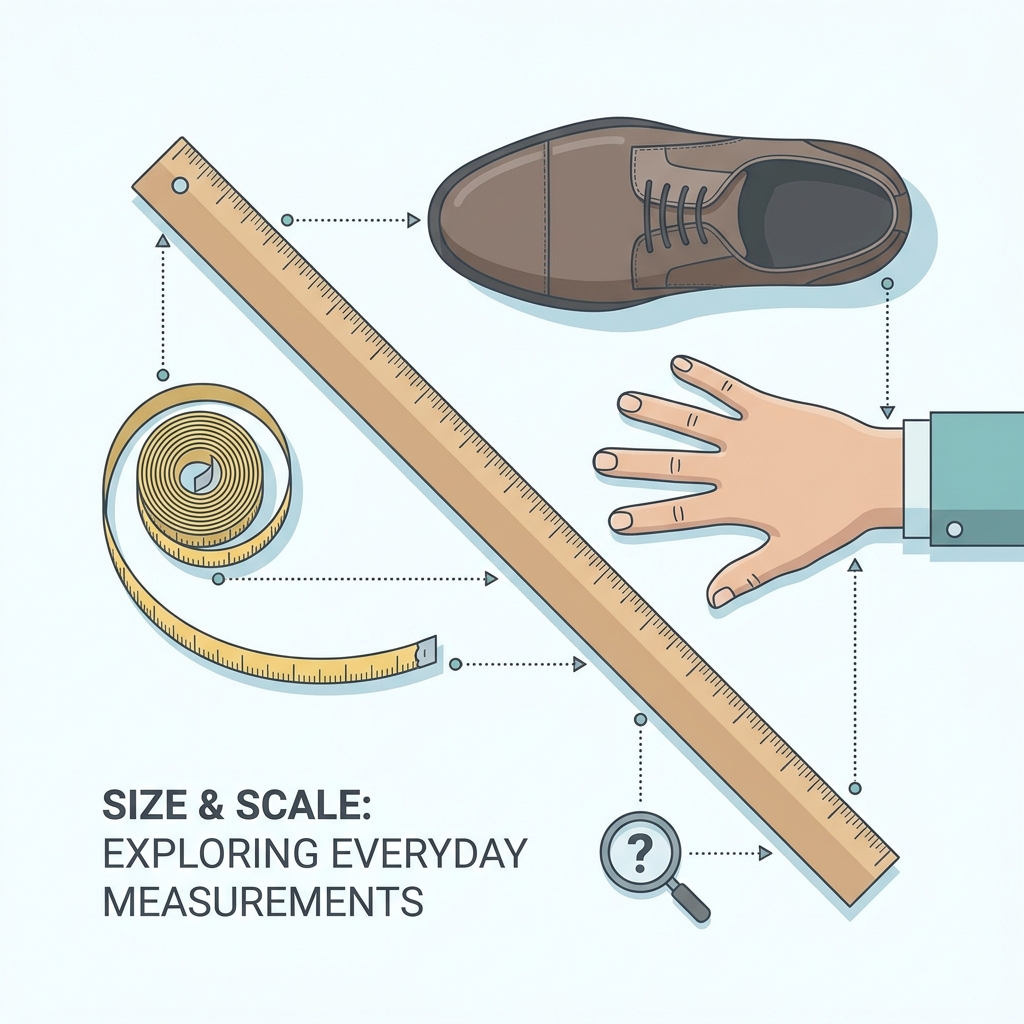
A 2002 European study found no correlation between penile length and shoe size, a finding confirmed by multiple meta-analyses through 2025. The myth persists for an understandable reason: both feet and genitalia grow during puberty under the influence of androgens, creating a superficially plausible but causally unrelated association. Verdict: the correlation is too weak to predict anything for any individual man.
Height: A Weak Signal at Best
Some studies show a weak positive correlation between height and erect penile length. Masters and Johnson, who measured over 300 men, found no consistent correlation. As a memorable data point, the largest penis recorded in one major study belonged to a man who stood 5 feet 7 inches. Verdict: height is unreliable, with far too much variance within any given height bracket.
Overall Hand Size and Body Proportions
General hand size should not be confused with the specific 2D:4D digit ratio discussed later. Overall body size correlates only weakly because both are influenced by general growth hormones, a mechanism distinct from the androgen-specific pathway that directly shapes genital development. Verdict: general hand or body size is not a useful predictor.
BMI and Weight: A Visibility Problem, Not a Size Problem
Higher BMI, especially central adiposity, is linked to shorter visible penile length, largely because the pubic fat pad conceals the base rather than because actual anatomy shrinks. There is a developmental nuance worth noting: a 2025 Vietnamese cohort study of 290 men found that prepubertal obesity, not adult BMI, was associated with shorter stretched penile length, suggesting childhood weight may influence development during the pubertal growth window. Verdict: adult BMI affects perceived size, not actual size; childhood obesity may have a modest developmental effect.
Predictors With Modest Scientific Support: The Tier 2 Biomarkers
The next two predictors are genuinely different. They are statistically significant in peer-reviewed research, yet still weak at the individual level. They function as population-level signals, not personal calculators. What elevates them above folklore is a shared mechanism: both are biomarkers of prenatal androgen exposure, not simple body-size proxies.
The 2D:4D Digit Ratio: Fingers as a Developmental Record
The 2D:4D digit ratio is the ratio of index finger length to ring finger length. A lower ratio, meaning the ring finger is longer than the index, reflects greater prenatal androgen exposure. A foundational Korean cohort study of 144 men found a statistically significant negative association between the 2D:4D ratio and stretched penile length (r = -0.216, P = 0.009).
Research published in Frontiers in Endocrinology in 2025 reinforced that the digit ratio is a stable biomarker of prenatal androgen exposure fixed from birth, with no significant correlation to adult sex hormone levels. In other words, it records the developmental environment, not current hormonal status. The practical limitation is stark: an r of -0.216 means the ratio explains only about 4.7 percent of the variance in penile length. Verdict: a real but weak biomarker; biologically fascinating, individually useless.
Nose Size: The Surprising Cadaver Study Finding
A 2021 forensic cadaver study found a significant correlation between nose size and penile size. A 2025 multifactorial study published in Andrology confirmed nose size as a significant predictor of stretched penile length in multivariate analysis, alongside BMI. The likely mechanism is not overall body size but shared developmental biology: nasal cartilage and penile tissue respond to the same androgen-driven pathways during specific developmental windows. Verdict: statistically significant under controlled conditions, but far too imprecise for real-world individual assessment.
The Strongest Known Predictor: Anogenital Distance
Anogenital distance (AGD) is the measurement from the anus to the base of the scrotum. It is an established, reliable marker of prenatal androgen exposure, with longer AGD reflecting greater androgen activity during the masculinization programming window.
Research from 2024 and 2025 identifies AGD as the strongest independent predictor of stretched penile length, outperforming foot length, hand size, height, and every other anthropometric measure examined in the 2025 multifactorial Andrology study. The reason it works when other measures fail is direct: AGD is shaped by the same androgen signaling cascade that drives penile development, during the same prenatal window. It is a co-product of the identical biological process, not a distant proxy.
The obvious limitation is that AGD is not something anyone measures in daily life, and it requires clinical measurement to be meaningful. Verdict: the gold-standard biomarker for predicting stretched penile length, and completely impractical outside a research or clinical setting.
The Unifying Biology: Why These Predictors All Point to the Same Window
Every predictor above points back to one event. During the masculinization programming window, testosterone and dihydrotestosterone (DHT), acting through the androgen receptor, simultaneously organize genital anatomy, finger-length ratios, anogenital distance, and other androgen-sensitive tissues. That is why these seemingly unrelated measurements share a statistical thread.
There is a compelling genetic wrinkle. The androgen receptor gene sits on the X chromosome, which men inherit from their mothers. A man’s mother’s genetics may therefore play a larger role than his father’s in determining his size.
There is also an environmental dimension. Prenatal phthalate exposure, from plastics and food packaging, has been significantly associated with shorter stretched penile length and reduced penile width at birth, even after controlling for overall body size. This connects the topic to broader concerns about endocrine-disrupting chemicals.
The full hierarchy reads: AGD > 2D:4D digit ratio > nose size > height > shoe size and hand size. All of them measure the same underlying variable, prenatal androgen exposure, with steadily decreasing accuracy. Because every external predictor is a proxy for a biological event that occurred before birth, and because that event cannot be changed retroactively, the entire prediction conversation has a natural ceiling.
What the Science Actually Tells Us About Size and Satisfaction
If prediction is unreliable and size is largely fixed by prenatal biology, a better question emerges: what does the research say actually matters for sexual satisfaction?
The answer is girth. In one study, approximately 32 percent of women considered girth important for satisfaction, compared with 21 percent for length. A 2015 UCLA study published in PLOS ONE, which used 3D-printed models, found that women preferred average-to-slightly-above-average length paired with above-average girth.
The anatomy explains why. The vaginal canal is most sensitive in the first 2 to 3 inches from the opening. Girth, through lateral pressure and friction, drives satisfaction more than depth of penetration does.
Perception is its own factor. Small penis syndrome (SPS) is actually more common among men with normal-sized penises than among those who are clinically small. Many men who believe they fall below average are, in fact, well within the normal range. Reality and self-perception frequently diverge.
One more curiosity from the literature: a 2023 meta-analysis found that average erect penile length increased 24 percent over 29 years globally, an unexplained trend possibly tied to endocrine disruptors, obesity trends, or improved measurement standardization. The key takeaway is that length is largely immutable after puberty, while girth is the one dimension where modern medicine offers a reliable, evidence-backed intervention.
From Prediction to Action: The Clinical Case for Girth Augmentation
The clinical pivot follows logically. Since every external predictor is a weak proxy for a trait fixed before birth, and since length is largely immutable post-puberty, girth augmentation represents the only clinically validated, post-developmental intervention available.
The Fifth International Consultation on Sexual Medicine (ICSM 2024), published in January 2026, provides the most current international clinical consensus on penile augmentation, covering physical methods, medical therapy, and surgical interventions including fillers.
Hyaluronic acid (HA) fillers stand out as the evidence-backed standard. A retrospective study of roughly 300 men using the UroFill technique reported 91 percent patient satisfaction and 90 percent mean filler retention at 12 months. The clinical advantages are meaningful: HA fillers are reversible with hyaluronidase, carry low complication rates, do not affect erectile function when properly performed, and produce immediately visible results.
Typical outcomes include an increase of up to 1 to 1.5 inches in girth, with results lasting 18 to 24 months depending on product, volume, and individual metabolism. This differs sharply from surgical lengthening, which carries a significantly higher risk profile and is not recommended by leading clinical bodies as a first-line intervention. Girth augmentation via fillers rests on a substantially stronger evidence base.
What to Expect From a Non-Surgical Girth Procedure
The procedure profile is deliberately conservative. It is non-surgical and performed on an outpatient basis, completed in under one hour, with no general anesthesia required.
A staged treatment approach uses multiple sessions rather than a single dramatic procedure. This improves symmetry, reduces risk, and produces smoother, more natural-looking results. Recovery is efficient: most men are back on their feet within 10 days, and sexual activity can typically resume within 7 to 10 days, considerably faster than the 40-plus day recovery associated with some permanent filler options.
The results profile is strong. Patients see immediate visible enhancement, with 80 to 90 percent permanent improvement in girth and volume. Results look and feel natural in both flaccid and erect states, and normal sensation and function are maintained.
On pricing: procedures start at $7,500 and increase depending on desired results. Pricing is structured by syringe, and most men begin with a minimum of 10 syringes; the average first procedure involves approximately 15 syringes. Final cost depends on the desired outcome and individual anatomy. Follow-up is typically scheduled 2 to 3 months after the initial treatment, with optional periodic touch-up sessions for maintenance.
The ideal candidate is a generally healthy man with realistic expectations who seeks moderate, natural-looking enhancement and prefers a non-invasive, reversible-to-semi-permanent option over surgery.
Why Expertise and Experience Matter in This Procedure
Penile filler placement demands advanced knowledge of vascular and structural anatomy. This is not a routine aesthetics procedure and should never be treated as one. Hospital-grade sterility protocols and infection-prevention measures are non-negotiable in any properly run practice.
Volume of clinical experience is decisive. A provider who has performed thousands of procedures has encountered the full range of anatomical variation and complication scenarios, and knows how to plan around them. Staged, conservative treatment planning focused on proportion, balance, and natural aesthetics is the hallmark of a medically credible approach, in contrast to single-session dramatic changes. Comprehensive consultation, realistic goal-setting, and thorough informed consent are clinical standards that protect the patient.
Stoller Medical Group / Penis Enlargement New York City reflects these standards, with over 15,000 enlargement procedures performed. Dr. Roy B. Stoller is board-certified with more than 25 years in aesthetic and restorative medicine and 5 years dedicated specifically to non-surgical male enhancement. The practice operates five locations across New York, Pennsylvania, and Minnesota, and offers free consultations.
Conclusion: Stop Predicting, Start Acting on What Actually Matters
The scientific hierarchy is clear. Shoe size and height are folklore. The 2D:4D digit ratio and nose size are weak-but-real biomarkers. Anogenital distance is the strongest known predictor. All of them measure the same thing: the prenatal androgen exposure that fixed a man’s anatomy before he was born.
That leads to a more productive question. Since prediction is unreliable and length is largely immutable after puberty, the useful inquiry is not “what does my shoe size say about me?” but “what can actually be done about the dimension that matters most to partners?” The evidence is consistent: girth is rated more important than length for sexual satisfaction by a majority of women across multiple studies, and it is the dimension most amenable to safe, evidence-backed clinical intervention.
Modern medicine has moved this conversation from passive prediction to active, informed decision-making. For men who want to take concrete action, the evidence-based path has never been clearer.
Ready to Move Beyond the Myths? Schedule Your Free Consultation
For men who have read this far and are thinking in terms of action rather than speculation, the next step is a conversation with qualified professionals.
Penis Enlargement New York City, operated by Stoller Medical Group, has performed over 15,000 procedures across five locations: Manhattan, Long Island, Albany, Chadds Ford in Pennsylvania, and Eagan in Minnesota. A free consultation is the low-barrier entry point, offering an opportunity to ask questions, understand the options, and receive a personalized treatment plan with no obligation.
The procedure is non-surgical, completed in under one hour, and designed for natural-looking results, with a 7 to 10 day return to sexual activity and 91 percent patient satisfaction in clinical data. Procedures start at $7,500, with most first procedures involving 10 to 15 syringes depending on desired results. Everything is discussed transparently during the consultation.
The prediction game has a ceiling. Informed action does not. Book a free consultation at the most convenient location and take the next step with confidence.