Best Food and Drink for Erectile Dysfunction: Ranked by Evidence Strength
Erectile dysfunction affects roughly 40% of men at age 40 and climbs to nearly 70% by age 70, making it one of the most age-progressive male health conditions in existence. Yet it is also one of the most modifiable through lifestyle. For high-achieving men accustomed to solving problems with data and strategy, generic advice to “eat more vegetables” is frustratingly vague. It offers no priorities, no ranking, and no sense of where to focus limited time and energy.
This guide does something different. It ranks the best food and drink for erectile dysfunction by actual evidence strength, not just mechanistic plausibility, so readers know precisely where to invest their effort. Equally important, it treats the removal of harmful foods as a serious vascular intervention in its own right. Adding the right foods and clearing the path of the wrong ones are two halves of the same strategy.
Tying it all together is the Dietary Inflammatory Index (DII), a validated framework that measures how pro- or anti-inflammatory an entire diet is. The goal is not to chase individual superfoods but to shift the whole pattern. Diet is a powerful lever, but it is one layer of a broader male wellness strategy, and this article will be honest about where lifestyle ends and clinical support begins.
Why Diet Directly Affects Erectile Function: The Vascular Connection
An erection is fundamentally a vascular event. It requires adequate blood flow into the penile corpora cavernosa, a process driven by nitric oxide (NO) relaxing smooth muscle so blood can fill and hold. Anything that supports NO production supports erectile function; anything that suppresses it undermines it.
This is where diet enters directly. Dietary nitrates, flavonoids, and antioxidants all support the NO pathway. Processed foods, refined sugar, and excess alcohol suppress it. This is not abstract wellness theory; it is the same biology that pharmaceutical erectile drugs target.
The connection runs deeper than the bedroom. ED is now recognized as an early warning sign of cardiovascular disease, typically appearing three to five years before coronary artery disease manifests. Diet, in other words, protects both sexual and heart health simultaneously. The National Institute of Diabetes and Digestive and Kidney Diseases (NIDDK) officially states that a healthy diet can lower the risk of developing ED and improve existing symptoms.
The unifying lens is the DII. A 2022 Frontiers in Nutrition study found that higher DII scores (more pro-inflammatory diets) were significantly associated with ED among US men. A 2020 JAMA Network Open cohort study of 21,469 men confirmed that overall dietary pattern quality, rather than any single food, drives the most meaningful ED risk reduction.
How to Read This Guide: Our Evidence-Tier System
Every recommendation in this guide is sorted into one of three evidence tiers so readers can calibrate their confidence appropriately.
- Tier 1: Clinically Validated. Supported by randomized controlled trials, large prospective cohort studies, or meta-analyses directly measuring ED outcomes.
- Tier 2: Mechanistically Plausible with Supportive Data. Backed by smaller trials, pilot studies, or strong mechanistic evidence (such as the nitric oxide pathway) but lacking large-scale, ED-specific trials.
- Tier 3: Emerging or Theoretical. Promising early data, case reports, or indirect evidence. Worth including in a healthy diet but not yet proven to independently move the needle.
Tier 3 foods are not useless. They contribute to overall dietary pattern quality and DII score reduction. Men simply should not rely on them as primary interventions. The “foods to avoid” section follows the same tiering logic. This transparency is deliberate and distinguishes this guide from generic lists.
Tier 1: Clinically Validated Foods and Dietary Patterns for Erectile Dysfunction
These are the highest-confidence recommendations, where evidence is strong enough that major health institutions and peer-reviewed meta-analyses agree. The majority of dietary effort should be anchored here.
The Mediterranean Dietary Pattern
If one intervention deserves to be called the dietary operating system for erectile health, it is the Mediterranean pattern. The 2020 JAMA Network Open cohort study of 21,469 men found that higher adherence to a Mediterranean diet was significantly associated with lower ED risk. A controlled clinical trial published in the International Journal of Impotence Research in 2006 followed men with metabolic syndrome on a Mediterranean diet for two years: 13 men in the intervention group reached an IIEF score of 22 or higher, compared to just 2 in the control group. A 2024 Asian Journal of Andrology meta-analysis of 14 studies and 27,389 participants confirmed that plant-based and Mediterranean-adjacent diets significantly reduced ED risk.
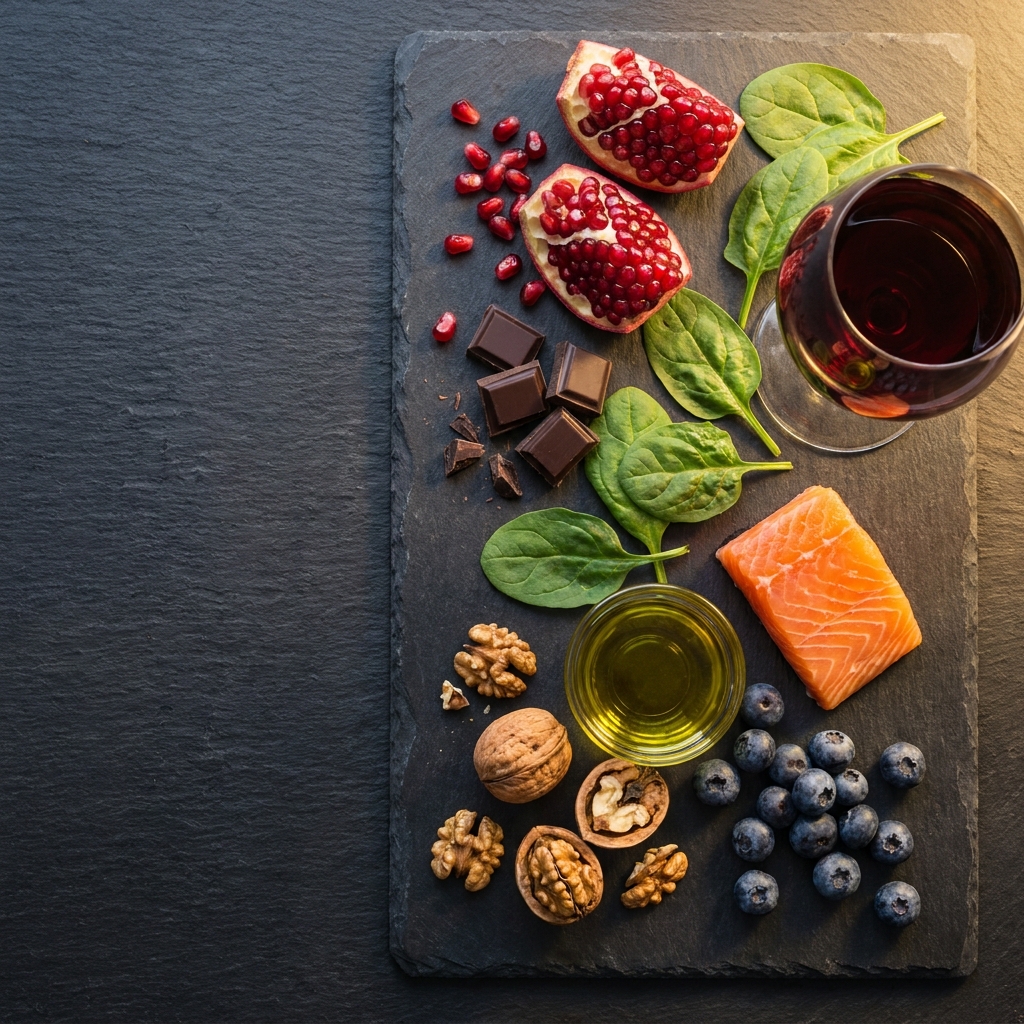
On a plate, this pattern means abundant vegetables, fruits, legumes, whole grains, nuts, and olive oil; fatty fish two to three times per week; moderate red wine; and minimal red or processed meat and refined sugar. It works because it reduces systemic inflammation (lowering DII score), supports endothelial function and NO production, and improves lipid profiles and blood pressure. The NIDDK explicitly endorses it for ED risk reduction. Every other food in this guide slots naturally into this framework.
Flavonoid-Rich Foods: Berries, Citrus, and Beyond
A landmark 2016 study from Harvard and the University of East Anglia found that men consuming just three to four weekly portions of flavonoid-rich foods were up to 10% less likely to suffer ED. Higher total fruit intake was linked to a 14% reduction in risk. Combining flavonoid-rich foods with regular exercise reduced ED risk by up to 21%, a meaningful motivator for men who already train.
The three most protective subtypes are anthocyanins (blueberries, cherries, blackberries, blackcurrants, radishes) and flavanones and flavones (citrus fruits such as oranges, grapefruit, and lemons). The benefit was most pronounced in men under 70, making this especially relevant for men aged 25 to 54. Flavonoids improve endothelial function, reduce oxidative stress, and support NO bioavailability.
The evidence-backed threshold is modest: three to four portions per week, not daily heroic quantities. A handful of blueberries on oatmeal, an orange as a snack, or blackberries in a smoothie achieves this without any dietary overhaul.
Leafy Green Vegetables: Dietary Nitrates and the Nitric Oxide Pathway
Spinach, kale, arugula, and Swiss chard are among the highest dietary sources of inorganic nitrates, which the body converts to nitric oxide via the nitrate-nitrite-NO pathway. This is the same fundamental mechanism that PDE5 inhibitors like sildenafil exploit downstream. Dietary nitrates support the upstream NO production those drugs protect. Because the mechanism is so well established in cardiovascular science, leafy greens earn Tier 1 status.
Practically, men should aim for at least one serving of leafy greens daily: salads, sautéed spinach, arugula as a pizza base, or kale in smoothies. One important caution applies: men taking nitrate-based medications such as nitroglycerin should consult their physician before dramatically increasing dietary nitrate intake. As a bonus, leafy greens provide magnesium, which supports testosterone production, adding a hormonal dimension to the vascular benefit.
Fatty Fish: Omega-3s, Inflammation, and Hormonal Support
Salmon, mackerel, sardines, anchovies, and herring are the richest omega-3 sources. The omega-3 fatty acids EPA and DHA reduce systemic inflammation (directly lowering DII score), improve endothelial function, reduce triglycerides, and support healthy blood pressure. The 2024 Asian Journal of Andrology meta-analysis supports these Mediterranean-aligned dietary patterns. Omega-3s have also been associated with improved testosterone levels, addressing ED from both vascular and endocrine directions.
Two to three servings per week aligns with both the evidence and Mediterranean recommendations. Canned sardines and mackerel are cost-effective options, not just fresh salmon. Swapping processed meat for fatty fish is one of the single highest-leverage substitutions available for ED risk reduction.
Tier 2: Mechanistically Plausible Foods and Drinks With Supportive Evidence
These foods carry credible mechanistic rationale and supportive pilot data but lack the large-scale trial evidence of Tier 1. They are valuable additions to a Tier 1 foundation, not standalone solutions, and they meaningfully lower overall DII score.
Pomegranate Juice
A small clinical trial in the International Journal of Impotence Research showed improved erectile response in men with mild ED. The mechanism is its exceptionally high antioxidant content, which reduces oxidative stress in the vascular endothelium and improves NO bioavailability. Pomegranate juice has among the highest antioxidant capacity of any commercial juice. The trial was small and industry-funded: promising but not definitive. A reasonable inclusion is 8 oz of 100% pomegranate juice (not sweetened cocktail) several times per week, factoring in its calorie density for men managing weight. Given its direct ED trial data, it remains one of the stronger Tier 2 options.
Beetroot Juice: Nitrate Loading for Vascular Health
Beetroot is among the richest dietary nitrate sources, delivering the leafy-green mechanism in concentrated form. A 2024 Journal of Sexual Medicine pilot study found that a supplement combining L-citrulline and beetroot extract improved nighttime erectile function, and a small study found beetroot juice improved nitric oxide values by 21%. No large-scale trial has tested beetroot juice alone for ED, but the nitrate-to-NO pathway is well established, justifying Tier 2 status. A practical dose is 250 to 500 mL of cold-pressed juice (not heated, which degrades nitrates), ideally before physical activity, where nitrate loading also enhances performance and oxygen efficiency.
Nuts: Pistachios, Walnuts, and L-Arginine
A 2019 study suggested that including nuts in a regular dietary plan could improve erectile and sexual function, and a small trial found pistachios improved IIEF scores after three weeks of daily consumption. Nuts are rich in L-arginine (a direct NO precursor), healthy fats, and antioxidants. Walnuts add omega-3 alpha-linolenic acid, while pumpkin seeds and cashews provide zinc for testosterone synthesis. A small handful (about 30g) daily, prioritizing pistachios and walnuts, fits naturally within the Mediterranean pattern. Portion control matters, since obesity is an independent ED risk factor.
Oatmeal and Whole Grains
Oatmeal contains L-arginine and beta-glucan soluble fiber that reduces LDL cholesterol, directly benefiting vascular endothelial health. Whole grains such as oats, quinoa, barley, and brown rice lower inflammation compared to refined grains. This distinction is critical: the Health Professionals Follow-Up Study (2022) found refined grains associated with a 27% higher ED risk in men under 60. Replacing white bread and sugary cereals with steel-cut or rolled oats simultaneously addresses cholesterol, provides L-arginine, and removes a refined carbohydrate. Few morning choices offer more leverage.
Dark Chocolate (High Cocoa Content)
Dark chocolate at 70% cocoa or higher contains flavanols that stimulate NO production and improve endothelial function, while releasing serotonin and endorphins relevant to the performance anxiety that often accompanies ED. Evidence specific to ED is limited, drawn mostly from cardiovascular studies. One to two squares (roughly 20 to 30g) several times per week is a sustainable inclusion. Milk chocolate does not carry the same benefit, and caloric and sugar content should be considered.
The Coffee and Caffeine Debate: What the 2024 Evidence Actually Shows
Coffee is frequently praised for ED in popular media, but the strongest recent evidence tells a more nuanced story. A 2024 Journal of Health, Population and Nutrition meta-analysis of 51,665 men found no statistically significant relationship between coffee consumption and ED risk (RR=0.94, 95% CI: 0.86-1.03). A 2024 Frontiers in Endocrinology Mendelian randomization study, using genetic data to control for confounding, likewise found no causal association. Earlier observational studies suggested two to three cups daily might modestly reduce ED odds, but the genetic data adds important skepticism.
The bottom line: coffee is unlikely to meaningfully improve ED, though moderate consumption is not harmful and may offer cardiovascular benefits. One emerging angle worth noting is Seville (bitter) orange juice, which contains compounds that inhibit CYP3A4, the same enzyme that metabolizes sildenafil. Early data suggests it may enhance sildenafil bioavailability, though this is not yet a clinical recommendation and warrants physician discussion. Green tea, rich in catechins supporting arterial flexibility, may be a marginally better beverage choice for vascular health, though direct ED trials are lacking.
Tier 3: Emerging and Theoretical Options Worth Knowing
These options carry interesting rationale or early case-level evidence but should not be relied upon as primary interventions. They are bonus contributors to an already strong dietary pattern.
Watermelon and L-Citrulline: The Dosing Reality
Watermelon contains L-citrulline, which converts to L-arginine and then to nitric oxide. A study in the journal Urology found that oral citrulline supplementation (3g) improved erection hardness in men with mild ED and allowed a 68% increase in monthly intercourse frequency. Here is the point most articles avoid: to reach that 3g therapeutic dose from watermelon, a man would need well over 1 kg (roughly 700 mL or more of juice) per serving. Typical servings fall far short, a point confirmed by a 2022 PMC watermelon review. Eating watermelon is beneficial and supports vascular health, but it is not a substitute for citrulline supplementation if therapeutic doses are the goal. The 2024 Journal of Sexual Medicine pilot study pairing L-citrulline with beetroot extract suggests supplemental forms are more practical for therapeutic delivery.
The 2025 Whole-Food Plant-Based Diet Case Report: A Landmark Finding
A compelling and underreported 2025 case report in the American Journal of Lifestyle Medicine documented a 52-year-old man with vascular ED who adopted a whole-food plant-based (WFPB) diet following coronary stent placement, with complete resolution of ED by February 2024 — described as the first reported case of ED reversing after WFPB adoption.
A single case report is Tier 3 evidence; it cannot establish causation or generalizability. But it is scientifically significant as proof-of-concept and aligns with the broader evidence base. A WFPB diet dramatically lowers DII score, maximizes nitrate intake, eliminates saturated fat and processed food, and supports endothelial repair. Importantly, this man had established cardiovascular disease, and the intervention was dramatic and medically supervised, illustrating the ceiling of dietary intervention when vascular damage is severe. This aligns with the 2024 Asian Journal of Andrology meta-analysis (OR=0.71 for plant-based diets) and the 2025 Journal of Nutrition narrative review. One important caveat applies: refined grains and sweetened beverages raised ED risk 27% in men under 60, confirming that whole-food quality matters, not just plant origin.
Hydration: The Overlooked Foundation
Adequate hydration maintains blood volume and viscosity, supporting the efficient circulation erectile function depends on. Chronic mild dehydration reduces blood volume and can impair the vascular response required for erection. Strategically, choosing water over sugary drinks or alcohol removes two of the most ED-aggravating beverages at once, making hydration a “clearing the path” intervention as much as a positive addition. Aiming for 8 to 10 glasses daily, more with physical activity, is simple, actionable, and cost-free.
Clearing the Path: Foods and Drinks That Actively Harm Erectile Function
Even the best pro-erectile diet is undermined if pro-inflammatory, vascular-damaging foods remain. The DII framework demands both adding anti-inflammatory foods and removing pro-inflammatory ones. For men whose baseline diet is poor, the avoidance side may be equally or more impactful than any addition.
Alcohol: The Dose-Dependent Vascular Disruptor
Acutely, alcohol is a CNS depressant that impairs the neural signals required for erection. Chronically, heavy drinking damages peripheral nerves and blood vessels in the penis and is associated with hypogonadism (reduced testosterone), adding a hormonal dimension. Chronic heavy use is a recognized independent ED risk factor. The nuance: moderate red wine (one to two glasses) is part of the Mediterranean pattern and contributes flavonoids. The harm is dose-dependent. Limiting consumption to one or two drinks on occasion and avoiding chronic daily heavy drinking (which is also calorie-dense and promotes obesity) is the evidence-supported approach.
Sugary Drinks and Refined Carbohydrates: The Insulin Resistance Pathway
High sugar intake drives blood glucose spikes, insulin resistance, obesity, and type 2 diabetes, all major independent ED risk factors through vascular and hormonal pathways. The 2022 Health Professionals Follow-Up Study found refined grains, fruit juices, and sweetened beverages associated with a 27% higher ED risk in men under 60. Chronic hyperglycemia damages endothelial cells and reduces NO bioavailability directly. Replacing sodas, energy drinks, and sweetened juices with water or unsweetened tea, and swapping white bread and rice for whole grains, represents one of the highest-leverage changes available, especially for younger men quietly building insulin resistance.
Fried and Ultra-Processed Foods: Inflammation and Arterial Damage
Fried foods deliver trans fats and oxidized lipids that raise LDL, lower HDL, increase inflammation, and promote atherosclerosis, narrowing the arteries that supply the penis. Ultra-processed foods dramatically raise DII scores, and the 2022 Frontiers in Nutrition study tied higher DII scores to ED. Processed meats such as bacon, sausage, and deli meats compound inflammation and cardiovascular harm. Limiting fried food to rare occasions and replacing processed meat with fatty fish, legumes, or poultry serves both heart and erectile health simultaneously.
High-Sodium Foods: The Blood Pressure and Arterial Stiffness Connection
Chronic high sodium raises blood pressure, promotes arterial stiffness, and damages the endothelium, all of which impair the vascular response required for erection. Culprits include canned soups, processed meats, restaurant meals, soy sauce, and fast food. Hypertension is one of the most common ED comorbidities, and notably, many antihypertensive drugs (particularly beta-blockers and thiazide diuretics) can themselves cause ED, making dietary blood pressure control preferable where possible. Aiming for under 2,300 mg of sodium daily (ideally under 1,500 mg with existing hypertension), cooking at home with herbs and spices, and reading labels are practical starting points.
Putting It All Together: A Practical Anti-ED Dietary Framework
The strategy synthesizes into what can be called DII-optimized Mediterranean eating: maximizing anti-inflammatory, pro-vascular foods while systematically eliminating the most harmful elements. A practical daily template looks like this:
- Morning: Steel-cut oats with blueberries and walnuts; black coffee or unsweetened green tea; water.
- Midday: A large salad on an arugula or spinach base with olive oil and lemon dressing, sardines or grilled salmon, cherry tomatoes, and a handful of pistachios.
- Afternoon: A small square of 70%+ dark chocolate or an orange.
- Evening: Grilled salmon or mackerel with roasted vegetables (including beets), quinoa or brown rice, and an optional glass of red wine.
Evidence-backed weekly targets include three to four portions of flavonoid-rich foods (10% ED risk reduction), two to three servings of fatty fish, and leafy greens daily. Going plant-based is not sufficient on its own; whole-food quality is what matters, since fruit juice, sweetened plant milks, and refined grains undermine the strategy. The DII framework reinforces the point: every choice raises or lowers inflammatory load. The goal is consistent pattern-level improvement, not daily perfection. Because combining flavonoid-rich foods with exercise cuts ED risk by up to 21%, diet and exercise are multiplicative, not merely additive.
How Long Does Dietary Change Take to Affect Erectile Function?
Vascular improvement is real but not immediate. The 2006 International Journal of Impotence Research trial observed significant IIEF gains over a two-year intervention. The 2025 WFPB case report involved dietary changes begun in 2021 with ED resolving by February 2024, a multi-year timeline for reversing established vascular ED. Men with milder, early-stage ED may respond faster than those with established vascular damage.
Dietary change is a long game, most powerful as prevention and as a complement to other interventions rather than a rapid fix. For results-oriented men aged 25 to 54, the encouraging reality is that broader cardiovascular benefits (improved energy, blood pressure, and cholesterol) arrive sooner than ED-specific gains, providing early positive reinforcement. For men whose ED is already established and affecting quality of life, diet alone may not be sufficient, which is where clinical evaluation becomes important. Understanding realistic results timelines for penile enhancement follows a similar logic: meaningful change requires sustained commitment over months, not days.
When Diet Reaches Its Ceiling: Understanding the Limits of Lifestyle Intervention
For many men, particularly those with established vascular disease, hormonal imbalances, neurological factors, or significant psychological components, dietary change alone will not fully resolve ED. A 2020 NHANES analysis in the International Journal of Impotence Research found that, after controlling for age, comorbidities, activity level, and BMI, no significant differences in erectile function appeared among men on different diet types, suggesting overall comorbidity burden may matter more than specific diet type in men with established ED.
ED is multi-factorial: vascular, hormonal, neurological, and psychological contributors often coexist, and diet primarily addresses the vascular and inflammatory dimensions. This is not a failure of dietary intervention but an honest assessment of its scope. Diet is a foundational layer, not the entire building. A useful model is the male wellness stack: diet, exercise, sleep optimization, stress management, and clinical evaluation when needed. For men who have optimized lifestyle and still experience ED, non-surgical male enhancement options represent an intelligent next step rather than a last resort. Because ED signals cardiovascular risk, that evaluation doubles as an important heart-health screening opportunity.
Conclusion: Diet as the Foundation of a Broader Male Wellness Strategy
The evidence points to a clear hierarchy. The Mediterranean dietary pattern is the highest-evidence strategy for ED risk reduction, supported by large cohort studies, clinical trials, and institutional endorsement. Flavonoid-rich foods at three to four servings per week offer a specific, measurable reduction of up to 10%. Leafy greens, fatty fish, nuts, and whole grains support the vascular and hormonal mechanisms behind erectile function. The “clearing the path” strategy (eliminating excess alcohol, sugar, refined carbohydrates, fried foods, processed meats, and high sodium) is equally important as any addition.
The Dietary Inflammatory Index is the unifying framework: shifting the entire pattern toward anti-inflammatory eating, rather than chasing single superfoods, produces the most durable results. The 2025 WFPB case report shows complete reversal is possible but requires sustained, whole-food commitment. Coffee’s ED benefit is not supported by the strongest 2024 evidence, and watermelon’s citrulline content, while real, is practically insufficient at normal serving sizes. Every dietary improvement for erectile health is simultaneously an investment in cardiovascular longevity. Dietary optimization is the most powerful self-directed tool available, and for men who want to go further, clinical expertise is a strength, not a weakness.
Ready to Go Beyond Diet? Explore the Full Range of Options
Men who have optimized diet and lifestyle and still want to explore additional options for sexual confidence and performance can take the next step with clinical support. Dr. Roy B. Stoller and the team at Stoller Medical Group offer a range of evidence-based, non-surgical solutions specializing in non-surgical male enhancement, including penile girth augmentation using collagen-stimulating dermal fillers, with over 15,000 procedures performed across five locations.
These procedures are minimally invasive, completed in under an hour, with sexual activity resumable within 7 to 10 days, designed for men who value their time and discretion. Free consultations are available. Procedures start at $7,500 and scale with desired results; pricing is by syringe, with most men starting at a minimum of 10 syringes and averaging 15 syringes during their first procedure.
Schedule a complimentary consultation at one of five locations across New York, Pennsylvania, and Minnesota to take the next step toward complete male wellness.
Locations: Manhattan, Long Island, and Albany (NY); Chadds Ford (PA); and Eagan (MN).