
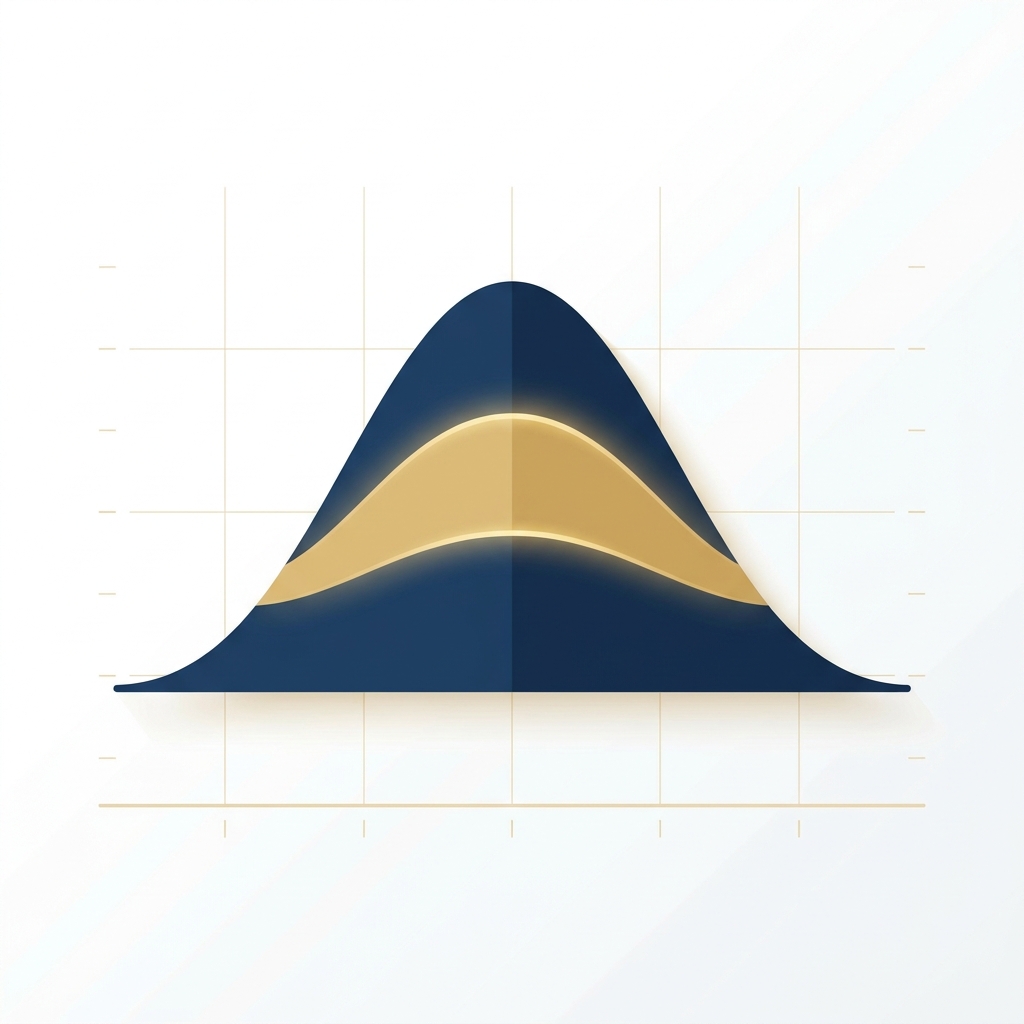
Penile Length Distribution: Where Most Men Actually Fall on the Bell Curve
Introduction: The Bell Curve Nobody Shows You
Most men carry a mental benchmark of “normal” that is quietly, measurably wrong. They have internalized a number, usually somewhere between 6 and 7 inches, and they have spent years assuming they fall short of it. The clinical data tells a very different story.
This article does not present a single average number. It presents penile length as what it actually is: a statistical bell curve, a true population distribution that allows any man to locate exactly where he falls among his peers. That distinction matters, because the anxiety most men feel is built on a comparison to a benchmark that does not exist in the clinical literature.
Size anxiety is a documented phenomenon with real consequences for mental health, sexual confidence, and quality of life. It deserves accurate information rather than speculation. The data referenced here is drawn from the two most authoritative sources available: the Veale et al. (2015) BJU International nomogram, built on 15,521 clinician-measured men, and the Belladelli et al. (2023) World Journal of Men’s Health meta-analysis, covering 55,761 men across 75 studies.
Two revelations follow. First, where men actually fall on the distribution. Second, why girth, not length, is the dimension that drives satisfaction and has evidence-based, minimally invasive solutions. This article is written for the professional man aged 25 to 54 who has privately wondered where he stands and deserves the truth.
Why Most Size Data Is Wrong: Clinician-Measured vs. Self-Reported
The single greatest flaw in nearly all consumer-facing size data is that it relies on self-reported measurements, which systematically inflate the average.
A 2025 study published in Sexual Medicine (Oxford Academic), examining 342 men, found that 72.81% overestimated their own erect penile length. Self-reported lengths exceeded clinician-measured values by an average of 0.92 cm, a statistically significant gap (P < .001). Nearly three in four men believe they are larger than they actually measure.
The mechanism is well understood. Men tend to measure inconsistently, often from the top of the shaft in a flaccid or semi-erect state, and they are subject to a documented visual foreshortening illusion when looking downward at their own anatomy. The valid clinical reference is standardized bone-pressed erect length (BPEL), measured by a clinician.
This inflation compounds when men estimate the “average.” Surveys consistently show men guess the average erect length at 6 to 7 inches, a full inch or more above the actual clinician-measured average of roughly 5.1 to 5.5 inches. When both the benchmark and the self-assessment are distorted, the resulting anxiety is statistically unfounded for the overwhelming majority of men.
With the methodology corrected, the real distribution comes into focus.
The Clinical Reference Standard: The Veale et al. Nomogram Explained
The Veale et al. (2015) study, published in BJU International, is the clinical gold standard. It compiled clinician-measured data from 15,521 men and deliberately excluded those with penile abnormalities, prior surgery, or erectile dysfunction complaints.
The key findings: a mean erect length of 13.12 cm (5.17 inches), with a standard deviation of 1.66 cm, and a mean erect circumference of approximately 11.66 cm (4.59 inches).
A nomogram is best understood as a reference chart that places any individual measurement within the population distribution, essentially the adult equivalent of a pediatric growth chart. It is the tool urologists and sexual medicine specialists actually use when counseling patients, not a media-friendly headline figure.
The exclusion criteria are a strength, not a limitation. By removing men with underlying penile conditions, the study reflects the healthy male population, making it the most relevant reference for men without pathology.
Reading the Bell Curve: Where Do Most Men Actually Fall?
In any normal distribution, 68% of all values fall within one standard deviation of the mean, 95% within two, and 99.7% within three. Applying Veale’s numbers produces a clear picture.
- Approximately 68% of men have an erect length between 11.46 cm and 14.78 cm, or roughly 4.51 to 5.82 inches. This is the statistical normal range.
- Approximately 95% of men fall between 9.80 cm and 16.44 cm, or roughly 3.86 to 6.47 inches erect.
- Only about 2.5% of men exceed 6.47 inches erect, and only about 2.5% fall below 3.86 inches.
Clinical micropenis is defined as a stretched or erect length 2.5 standard deviations below the mean, approximately 7.5 cm stretched or 7.6 cm erect. It affects only about 0.6% of men. It is a rare anatomical condition, not a label for men with normal-range anatomy.
The practical takeaway is direct: the overwhelming majority of men who experience size anxiety have clinically normal anatomy. The bell curve makes this statistically undeniable.
The Belladelli et al. (2023) meta-analysis corroborates this picture. Across 75 studies and 55,761 men, the pooled mean erect length was 13.93 cm (95% CI: 13.20 to 14.65 cm), consistent with Veale and reinforcing the same distribution.
Geographic Variation: Does Population Matter?
Geographic variation in penile dimensions is real and clinically documented. It is best addressed with data rather than folklore.
A 2024 meta-analysis (Mostafaei et al., Urology Research and Practice) of 33 studies covering 36,883 men, using clinician-measured data only, confirmed significant variation by WHO region. Mean flaccid length was largest in the Americas (10.98 cm), and mean flaccid circumference was also largest among men from the Americas (10.00 cm).
The critical point is that regional variation exists within the same bell curve framework. The shape of the distribution stays consistent even as the mean shifts slightly by population. The appropriate reference for any given man is the population that matches his demographic, not a global average that blends highly heterogeneous groups. For context on average penile size in America, regional data provides a more accurate benchmark than global pooled figures.
This geographic data is almost entirely absent from consumer content, which is precisely why it belongs in an accurate, current discussion.
A Surprising Trend: Erect Length Has Increased 24% Over 29 Years
One of the more striking findings from Belladelli et al. (2023) is temporal: erect penile length has increased approximately 24% globally over the 29 years from 1992 to 2021, a trend observed across multiple regions and age groups.
The cause remains under investigation. Proposed factors include endocrine-disrupting chemicals, shifts in BMI distribution, and changes in measurement methodology. The trend itself, however, is statistically robust across the dataset.
This underscores the central message: the “average” is a moving target, and any single benchmark figure should be interpreted with context. The distribution, not one number, is what matters for accurate self-assessment.
The Perception Gap: Why Men Misjudge Their Own Size
The 2025 Oxford Academic study found that 72.81% of men overestimated their erect length. Perception distortion cuts in multiple directions, and several factors conspire to make men misjudge themselves.
Visual foreshortening. Looking downward at one’s own anatomy creates an angle that makes the penis appear shorter than it measures from a lateral or standardized clinical perspective.
Growers versus showers. Flaccid length is a poor predictor of erect length. Men who are “growers,” with a high lengthening ratio, are especially prone to underestimating their erect size when they assess themselves in the flaccid state.
Body composition. For every 30 to 50 pounds of weight gain, visible (non-bone-pressed) length may decrease by roughly 0.5 to 1 inch due to the suprapubic fat pad. This is a reversible effect unrelated to actual penile anatomy, and it is significantly underreported.
Pornography. Male performers are selected for anatomy in the top third percentile of the population, and camera angles further exaggerate apparent size. Research in SAGE Open (2019) linked sexually explicit media consumption to lower genital self-esteem in men. The result is a false benchmark that fuels anxiety in men with entirely normal anatomy.
Combined, visual illusion, flaccid-state assessment, body composition, and pornography exposure create a perfect storm: systematic underestimation of one’s own size measured against a systematically inflated benchmark. The gap is almost entirely perceptual, not anatomical.
Small Penis Anxiety, Penile Dysmorphic Disorder, and True Micropenis: Understanding the Clinical Distinctions
Size concern exists on a clinical spectrum, and conflating distinct entities does men a disservice.
Small Penis Anxiety (SPA) is excessive anxiety about normal-sized anatomy, driven by distorted perception rather than any abnormality. It is associated with depression, anxiety, and sexual dysfunction, and it is amenable to counseling. A 2025 study (GamalEl Din et al., Urology Research and Practice) of 200 potent men aged 25 to 40 found that counseling in the erect state produced significant reductions in anxiety and depression scores, supporting erect-state measurement as a clinical protocol for SPA.
Penile Dysmorphic Disorder (PDD) is a subtype of Body Dysmorphic Disorder involving severe, persistent fixation on perceived penile inadequacy that causes significant distress and functional impairment. It requires psychological or psychiatric intervention. Augmentation procedures are not an appropriate first-line treatment. The Veale et al. (2015) COPS-P screening scale, a validated 9-item tool, discriminates between PDD, SPA, and normal concern.
The ICSM 2024 recommendations (Fifth International Consultation on Sexual Medicine) issued 20 evidence-based recommendations distinguishing micropenis, buried penis, and PDD as separate clinical entities requiring different management.
To anchor the spectrum: true micropenis (approximately 7.5 cm stretched or 7.6 cm erect) affects only about 0.6% of men. Lower male genital self-image is associated with higher depression and anxiety scores, making this a legitimate mental health topic. Men experiencing significant distress are encouraged to seek clinical evaluation. Understanding normal size and men’s body confidence is often the first step toward resolving that distress.
For men with normal anatomy seeking a meaningful, measurable change in confidence and partner satisfaction, the evidence points clearly toward a specific dimension, and it is not length.
The Dimension That Actually Drives Satisfaction: Why Girth Matters More Than Length
Partner preference research consistently identifies girth, not length, as the dimension that drives sexual satisfaction.
In one influential study of 50 women, 45 rated width as more important than length. A PLOS ONE study using 3D-printed models found that the preferred girth-to-length ratio mattered more than either dimension alone, with girth being the dominant variable.
The satisfaction data reinforces this. Only about 55% of men report satisfaction with their own penis size, while 84 to 85% of women report satisfaction with their partner’s size (Lever, Frederick & Peplau, Psychology of Men & Masculinity 2006, n=52,031). The disparity strongly suggests that male size anxiety is largely self-generated rather than partner-driven.
While 45% of men wish their penis were longer, the vast majority of men seeking procedures have clinically normal-length anatomy, and length surgery carries significantly higher risk than girth augmentation.
The clinical implication is straightforward: if the goal is meaningful improvement in sexual confidence and partner satisfaction, the evidence-supported target is girth, and the evidence-supported method is non-surgical filler augmentation. One critical distinction: penile filler does not increase length. It adds circumference only. Men motivated by length concerns should understand this clearly before pursuing any procedure. For those exploring male enhancement without lengthening surgery, girth augmentation represents the evidence-based alternative.
The Evidence for Girth Augmentation: What the Clinical Literature Shows
Hyaluronic acid (HA) filler girth augmentation is the most studied non-surgical enhancement approach, supported by a growing body of peer-reviewed evidence.
- A 2025 Journal of Sexual Medicine single-center study (n=327) reported a mean of 15 mL of HA filler injected, a mean flaccid girth increase of 2.5 cm, patient-reported satisfaction of 89%, and no serious adverse events.
- The AUA 2024 Annual Meeting retrospective review of roughly 500 men confirmed a promising safety profile, with all complications classified as minor (Clavien-Dindo Grade I).
- A multicenter randomized controlled trial comparing HA and polylactic acid fillers, with 18-month follow-up, found significant girth increases and satisfaction improvements in both groups (p<0.001 and p<0.01) with no serious adverse events.
- The ICSM 2024 recommendations emphasize mandatory comprehensive assessment, careful counseling, and individualized treatment, underscoring that this is a legitimate, evidence-reviewed field of sexual medicine.
Across multiple study designs, non-surgical penile girth enhancement with HA filler has demonstrated consistent efficacy and a favorable safety profile.
Girth Augmentation at Stoller Medical Group: What the Procedure Involves
Stoller Medical Group, operating as Penis Enlargement New York City, has performed over 15,000 procedures, representing the most extensive clinical experience in non-surgical male enhancement in the United States.
The procedure is a minimally invasive penile augmentation using Belefil®, a hyaluronic acid-based, medical-grade, biocompatible dermal filler placed beneath the penile skin to enhance girth and volume. It results in an increase of up to 1 to 1.5 inches in girth and can be combined with glans enlargement and scrotal enhancement if desired.
The experience is designed to be straightforward: an outpatient treatment completed in under one hour, with no cutting, no general anesthesia, and immediate visible enhancement.
The results profile is compelling. Patients see 80 to 90% permanent improvement in girth and volume, with results typically lasting 18 to 24 months. Outcomes look and feel natural in both flaccid and erect states, and normal sensation and function are maintained. Recovery is rapid: back on their feet in 10 days, compared to 40-plus days with other permanent fillers, and sexual activity can typically resume within 7 to 10 days.
The practice uses a staged treatment philosophy, employing multiple sessions rather than a single dramatic procedure. This approach improves symmetry, reduces risk, and produces smoother, more proportional outcomes. Notably, the practice does not offer surgical penile lengthening, reflecting both a safety-first philosophy and the clinical evidence that non-surgical girth augmentation offers a superior risk-benefit profile.
Understanding the Investment: Pricing and What to Expect
Girth augmentation at Stoller Medical Group starts at $7,500, with total cost varying based on desired results and the number of syringes used. The procedure is priced by syringe, and most men begin with a minimum of 10 syringes. The average first procedure uses approximately 15 syringes. The consultation is the appropriate setting to determine the number right for an individual’s starting point and desired outcome.
For a professional man who has carried size-related anxiety for years, the relevant question is not cost alone. It is the value of confidence, sexual satisfaction, and the documented mental health benefits of resolving a concern that has quietly affected quality of life.
Free consultations are offered, and the practice maintains five convenient locations: Manhattan (515 Madison Avenue), Long Island (Jericho), Albany (Latham), Pennsylvania (Chadds Ford), and Minnesota (Eagan). Privacy and confidentiality are core practice values, and the entire process is designed with complete discretion. Learn more about male enhancement procedure confidentiality and what to expect from the consultation process.
Is Girth Augmentation Right for You? Candidacy and Realistic Expectations
The ideal candidate is a generally healthy man with clinically normal anatomy who seeks measurable girth enhancement, holds realistic expectations, and understands that the procedure adds circumference, not length.
Consistent with ICSM 2024 guidance, comprehensive assessment and careful counseling are mandatory before any augmentation. This is not an impulsive decision, and a reputable practice will confirm candidacy first.
For men with significant psychological distress, if size concern is causing severe anxiety, depression, or functional impairment consistent with PDD, psychological evaluation should precede or accompany any procedure. The consultation process is designed to identify this distinction.
Realistic outcomes are clear: up to 1 to 1.5 inches in girth, 80 to 90% permanent improvement, natural appearance and feel, and maintained sensation and function. Reviewing girth enhancement before and after results can help set accurate expectations before committing to a treatment plan.
Men who are “growers” deserve a specific note. If self-assessment has been conducted in the flaccid state, erect dimensions may already place a man comfortably within the normal range. The consultation is the right setting to establish actual erect measurements as a baseline.
The professional man who has privately carried this concern for years now has access to evidence-based options. The first step is a confidential consultation.
Conclusion: Your Place on the Bell Curve, and Your Options
The statistical reality is settled. The Veale nomogram and Belladelli meta-analysis confirm that roughly 68% of men fall within a 4.51 to 5.82 inch erect range, and roughly 95% fall within 3.86 to 6.47 inches. The vast majority of men experiencing size anxiety have clinically normal anatomy.
The perception bias is equally clear. Nearly three in four men (72.81%) overestimate their own erect length, and the benchmark most men compare themselves to, shaped by self-report inflation and pornography, is systematically distorted.
The satisfaction data follows the evidence: partner research consistently identifies girth, not length, as the dimension that drives sexual satisfaction, and girth augmentation is the evidence-supported, minimally invasive path to a meaningful, measurable change.
The mental health dimension is real. Lower genital self-image is associated with higher depression and anxiety scores, and resolving this concern, whether through accurate information, clinical counseling, or a procedure, carries documented wellbeing benefits.
The professional man who has spent years wondering where he stands now has both the data and the options. Knowledge is the first step. Action is available when he is ready.
Take the First Step: Schedule a Confidential Consultation
The next step is simple: schedule a free, confidential consultation with Stoller Medical Group / Penis Enlargement New York City.
The consultation is where accurate baseline measurements are established, realistic goals are discussed, the procedure is explained in detail, and a personalized treatment plan is developed, all with no obligation.
With over 15,000 procedures performed, prospective patients are not pioneers. They are joining a large, well-documented patient population reflected in the clinical literature’s 89% satisfaction rate. The practice operates across multiple locations for convenient access: Manhattan, Long Island, Albany, Pennsylvania, and Minnesota.
Privacy is a core practice value, and every consultation is completely confidential. The first step is simply making the call.