
Average Penile Length in USA: What the Bell Curve Reveals About Girth
Introduction: The Number You’ve Been Given Is Missing Half the Story
Nearly every man has encountered the figure at some point. The average erect penile length in the United States sits somewhere between 5.1 and 5.5 inches. It circulates in magazines, in locker room conversations, and across countless websites. What almost no one provides is the statistical context needed to interpret that number in any meaningful way.
For the professional man who has quietly wondered where he stands, that missing context matters enormously. High achievers tend to measure themselves against benchmarks, yet the benchmark most men carry in their heads for this particular dimension is wrong. Not slightly wrong. Systematically, measurably wrong.
This article makes three evidence-based promises. First, it establishes the most rigorous clinical data available on erect length. Second, it uses the normal distribution, the familiar bell curve, to show how tightly clustered the male population actually is. Third, it reveals why girth, not length, is the dimension that clinical research consistently identifies as the one that actually matters.
Everything that follows is grounded in peer-reviewed data, beginning with the Veale et al. (2015) meta-analysis of 15,521 clinician-measured men, the single most authoritative dataset ever compiled on the subject.
The Data Problem: Why Most Size Statistics Are Wrong Before You Even Read Them
Before any number can be trusted, one methodological distinction must be understood: the difference between self-reported and clinician-measured data. This is the single most important issue in the entire field.
A 2025 clinical study found that 72.81% of men overestimate their own erect length when self-reporting, with self-reported values exceeding clinician-measured values by an average of 0.92 cm. That inflation is not random. It is a consistent, predictable pattern.
The consequences are visible in the numbers themselves. Self-reported surveys routinely produce averages around 6.4 inches. The 2026 Bespoke Surgical survey of 3,308 US adults, for example, returned a self-reported national average of 6.34 inches. Clinician-measured studies, by contrast, land between 5.1 and 5.5 inches. That gap of roughly one full inch is not a measurement error. It is measurement bias.
Several forces drive this distortion:
- Volunteer bias. Men who confidently participate in size studies tend to be more satisfied with their size, skewing self-selected samples upward.
- The foreshortening effect. A man views his own anatomy from above, at a downward angle that visually compresses length. He literally sees himself as shorter than he is.
- The pubic fat pad effect. Excess abdominal fat can conceal one to two inches of shaft, reducing visible length without altering the underlying anatomy at all.
The conclusion is unambiguous. The only valid benchmark is clinician-measured data drawn from large, representative samples. Every self-reported figure should be treated with skepticism.
The Gold-Standard Clinical Data: What 15,521 Measured Men Actually Show
The definitive reference remains the Veale et al. (2015) meta-analysis published in BJU International. It pooled clinician-measured data from 15,521 men across 17 peer-reviewed studies, producing the nomograms clinicians still use for patient counseling today.
Its key findings:
- Mean erect length: 13.12 cm (5.17 in)
- Mean erect circumference (girth): 11.66 cm (4.59 in)
Crucially, the study excluded men with erectile dysfunction and men presenting specifically with size complaints. That exclusion is what makes it so reliable. It represents a clean population sample rather than a group of clinical outliers.
For US-specific context, the Herbenick et al. (2014) study measured 1,661 sexually active American men and reported a mean erect length of approximately 14.15 cm (5.57 in) and a mean erect circumference of 12.23 cm (4.8 in). Those figures sit slightly above the global averages, a difference most likely attributable to the study’s self-measurement methodology.
A 2020 review by King in the Journal of Sex and Marital Therapy reaffirmed the 5.1 to 5.5 inch clinical consensus, adding that once volunteer bias is accounted for, the true average likely sits toward the lower end of that range. A 2025 WHO-region meta-analysis provided regional nuance, finding that men in the Americas had the largest stretched penile length at 14.47 cm (5.70 in). For a broader international perspective, average penile size by country data reveals how these regional differences compare globally.
One additional finding adds intrigue. A 2023 meta-analysis led by Stanford Medicine, examining 55,761 men across 75 studies, found that erect penile length has increased 24% over the past 29 years globally. The trend is scientifically unexplained, and it complicates any attempt to treat a single benchmark as fixed and eternal.
The Bell Curve Explained: What the Normal Distribution Reveals About Where You Actually Stand
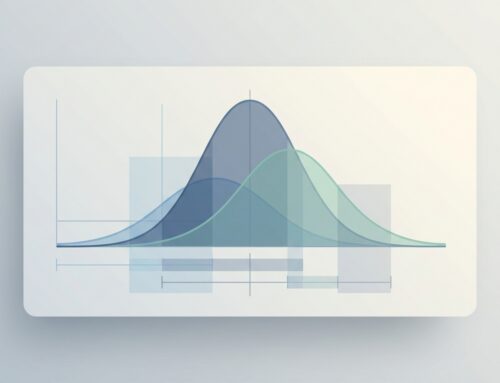
Most biological measurements follow a normal distribution. The population clusters tightly around the mean, with progressively fewer individuals as one moves toward either extreme. Penile length is no exception.
The statistical insight that reframes everything is this: the 95% range for erect length spans roughly 3.86 inches to 6.47 inches. A window of only about 2.6 inches contains virtually the entire male population.
The clustering is even tighter near the center. The difference between the 25th and 75th percentiles is only about 0.88 inches. In other words, the middle 50% of men are separated by less than a single inch.
Framed simply: if 100 men were measured, roughly 68 of them would fall within one inch of the mean in either direction. The population is dramatically more homogeneous than popular culture would ever suggest.
The practical implication is significant. A man measuring 5.0 inches is not “below average” in any meaningful clinical sense. He sits comfortably inside the densely packed normal range.
Yet surveys consistently show men guessing the average erect length at 6 to 7 inches, a full inch or more above reality. This is the perception gap, and its effect is almost cruel. It causes men with entirely normal anatomy to conclude they are below average, a statistical impossibility for most of them. Call it the measurement-bias illusion: inflated survey figures, pornography exposure, and the foreshortening effect combine to manufacture a false sense of deficiency. Understanding how to measure your penis correctly is an essential first step in replacing distorted benchmarks with accurate clinical data.
The Pornography Distortion: How Selection Bias Rewires the Mental Benchmark
Adult performers are statistical outliers, selected specifically because their dimensions exceed the norm. They occupy the far right tail of the distribution, not its center. They were never meant to represent typical anatomy, and by definition they do not.
Camera angles and production techniques compound the effect, exaggerating apparent size further. The result is a benchmark that is doubly inflated: outlier subjects filmed to look even larger than they are.
Repeated exposure quietly shifts a man’s internal image of “normal” upward. Over time, average anatomy begins to feel inadequate, not because anything has changed physically, but because the mental reference point has been recalibrated to an impossible standard.
The Psychological Toll: When Normal Anatomy Feels Like a Problem
The data reveals a striking contradiction that deserves a name: the penile size perception paradox. Roughly 85% of female partners report satisfaction with their partner’s size, yet somewhere between 45% and 68% of men demonstrate clinically significant size anxiety.
A study of more than 52,000 people sharpened the picture: about 85% of women reported satisfaction with their partner’s size, while only 55% of men were satisfied with their own. That 30-point gap makes clear that size anxiety is overwhelmingly a male psychological phenomenon rather than a reflection of partner dissatisfaction.
This is not a trivial cosmetic worry. A 2024 study in Andrology linked lower male genital self-image directly to higher depression and anxiety scores, establishing it as a documented mental health issue. Notably, that study found midpenile circumference (girth) specifically associated with anxiety levels, a detail that foreshadows the argument to come.
For clinical perspective, the Urology Care Foundation holds that surgery for penis enlargement is only medically necessary in cases of true micropenis, defined as a stretched length under 7.5 cm (roughly 3 inches). The overwhelming majority of men who seek enhancement have entirely normal measurements.
Professional men are not immune to this. In fact, the same analytical, benchmark-driven mindset that fuels career success can intensify size-related self-scrutiny, especially when the benchmarks being used are statistically invalid. The remedy, however, is not reassurance alone. It begins with measuring the right dimension.
The Pivot: Why Girth Is the Dimension That Actually Matters
Length has monopolized the public conversation. Clinical satisfaction research tells a very different story, consistently identifying girth as the more relevant dimension for sexual experience.
The evidence is consistent:
- A frequently cited 2001 Eisenman survey found 45 of 50 women (90%) rated penis width as more important than length for sexual satisfaction.
- A 2015 PLOS ONE study from UCLA, using 3D-printed penile models tested by 75 women, found a consistent preference for average-to-slightly-above-average length combined with above-average girth, with women favoring thicker models for one-time encounters.
- A BMC Women’s Health study found that women who expressed a size preference were more likely to cite girth than length.
Now consider the clinical girth data that almost no public content covers. Average erect circumference is approximately 4.59 to 4.8 inches (11.66 to 12.23 cm), according to the largest datasets. That number is rarely discussed, which means most men are benchmarking the wrong dimension entirely.
The 2024 Andrology finding closes the loop. Girth was specifically associated with anxiety levels, suggesting it is not only more satisfaction-relevant but also more psychologically impactful. For a man whose true concern is partner satisfaction and personal confidence, the evidence points clearly and consistently toward girth. Research on penile enhancement and partner satisfaction further supports why addressing girth produces the most meaningful outcomes.
What the Research Says About Girth Enhancement: Safety, Efficacy, and Satisfaction
If girth is the dimension that matters, the natural next question is what the evidence says about enhancing it. The answer is encouraging, and it rests on the same evidence-first standard applied throughout this article.
A 2025 single-center study published in the Journal of Sexual Medicine followed 324 patients receiving hyaluronic acid (HA) filler for penile girth enhancement. It reported 89% patient satisfaction, a mean girth increase of 2.5 cm, and no serious adverse events. Urology Times coverage of data presented to the Sexual Medicine Society of North America, involving roughly 500 men treated with HA filler, reported no erectile dysfunction and no loss of penile sensation.
The institutional footprint is meaningful. AUA News, an official American Urological Association publication, covered the evolving landscape of penile girth enhancement in August 2024, including HA filler safety data presented at the AUA Annual Meeting. A 2026 prospective study in the World Journal of Men’s Health evaluated HA filler over 48 weeks, assessing girth, stretched length, appearance satisfaction, and self-reported sexual satisfaction.
Two additional points strengthen the case. HA filler is reversible; it can be dissolved with hyaluronidase, a safety margin that surgical length procedures simply cannot offer. A 2025 Urology Research and Practice study of 200 men also found significant improvement in small penis anxiety scores after erect-state measurement counseling, reinforcing the value of both accurate measurement and targeted intervention. For men weighing their options, understanding increased girth patient outcomes provides a detailed look at what clinical results actually show.
Non-Surgical Girth Augmentation: How the Procedure Works
Non-surgical penile girth augmentation, sometimes called filler phalloplasty, uses collagen-stimulating dermal fillers to enhance girth and volume. Medical-grade, biocompatible filler is placed beneath the penile skin. There is no cutting and no general anesthesia.
The results profile is straightforward:
- Immediate visible enhancement following the procedure
- An increase of up to 1 to 1.5 inches in girth
- 80 to 90% permanent improvement in girth and volume
- Results that typically last 18 to 24 months
Recovery is notably fast. Patients are generally back on their feet within 10 days, compared with 40 or more days associated with some other permanent fillers, and sexual activity can typically resume within 7 to 10 days.
The approach is staged. Rather than one dramatic session, treatment is delivered across multiple sessions to prioritize proportion, balance, and natural aesthetics. Results are designed to look and feel natural in both flaccid and erect states while maintaining normal sensation and function. Where desired, glans enlargement and scrotal enhancement can be performed simultaneously.
The safety-first philosophy is deliberate. Stoller Medical Group does not offer surgical penile lengthening, a decision that reflects both the higher risk of those procedures and the weaker evidence for partner benefit. This is not a fringe choice, either. Male cosmetic procedures have increased 500% over the past 25 years, growing from roughly 3% to over 15% of cosmetic patients.
Understanding the Investment: Pricing and What to Expect
Pricing for non-surgical girth augmentation starts at $7,500 and increases depending on the patient’s desired results and individual anatomy. The procedure is priced by syringe, and most men begin with a minimum of 10 syringes. On average, a first procedure involves approximately 15 syringes, which determines the total investment for most patients.
For a professional man whose confidence and quality of life are genuinely affected, this represents a one-time medical investment in a dimension that clinical satisfaction research identifies as the most relevant, supported by peer-reviewed data showing 89% patient satisfaction.
Free consultations are available, allowing prospective patients to receive a personalized assessment and an accurate cost estimate before making any commitment. With more than 15,000 enlargement procedures performed, the practice offers the high-volume clinical context that supports confidence in that decision.
Is This Procedure Right for You? Candidacy and Realistic Expectations
The ideal candidate is a generally healthy man with clinically normal anatomy who seeks girth enhancement for confidence and sexual wellness. This is emphatically not a procedure limited to men with a medical micropenis diagnosis. As the research makes clear, most men seeking enhancement have entirely normal measurements. The goal is optimization of a satisfaction-relevant dimension, not correction of an abnormality.
If size anxiety is affecting confidence, relationships, or mental health, a consultation offers two things at once: accurate measurement counseling and a realistic picture of what enhancement can achieve. Expectations matter here. The procedure is designed for moderate, proportional enhancement, not dramatic or exaggerated change. Reviewing penile enhancement realistic goal setting before a consultation helps ensure that expectations are grounded in what the evidence actually supports.
The consultation process includes comprehensive education, informed consent, and individualized treatment planning based on the patient’s anatomy and goals. Discretion and confidentiality are treated as core elements of the experience, a priority that resonates strongly with a professional audience. Because surgical lengthening is not offered, men whose primary concern is length will receive honest guidance about what the evidence actually supports.
Conclusion: Reframe the Benchmark, Then Address the Right Dimension
Three evidence-based conclusions emerge from the data. First, the clinical average erect length is 5.1 to 5.5 inches, and 95% of men fall within a window of just 2.6 inches; the population is far more homogeneous than popular culture suggests. Second, most men with normal anatomy believe they are below average because they are benchmarking against inflated, self-reported, and pornography-derived figures. Third, girth, not length, is the dimension that clinical satisfaction research consistently identifies as more relevant, and yet it receives almost no public attention.
The psychological reframe is the essential first step. The anxiety most men feel about size reflects distorted benchmarks, not their actual anatomy. Correcting the benchmark corrects most of the anxiety.
For men who want to go further and address girth in a clinically supported, non-surgical way, the evidence base for HA filler enhancement is robust, with 89% patient satisfaction and no serious adverse events in the largest studies. Understanding where one actually stands, and knowing that a safe, evidence-backed option exists for the dimension that matters most, transforms a quiet source of anxiety into an informed, deliberate decision.
Take the First Step: Schedule a Free Consultation
For men ready to move from information to action, the next step is a free, confidential consultation. Stoller Medical Group, operating as Penis Enlargement New York City, offers five convenient locations across New York (Manhattan, Long Island, and Albany), Pennsylvania (Chadds Ford), and Minnesota (Eagan).
Procedures are led by Dr. Roy B. Stoller, a board-certified physician with more than 25 years in aesthetic and restorative medicine, five of them dedicated specifically to non-surgical male enhancement, and over 15,000 procedures performed.
The value proposition is clear: non-surgical, completed in under one hour, with a 10-day recovery, 80 to 90% permanent improvement, natural-looking results, and sexual activity resumable within 7 to 10 days. Pricing starts at $7,500, with most first procedures involving approximately 15 syringes, and a free consultation will provide a personalized estimate based on individual anatomy and goals.
The consultation is completely confidential and carries no obligation. It is simply an opportunity to obtain accurate measurements, ask clinical questions, and make an informed decision. Book a free consultation today at the location most convenient to you, with the most experienced non-surgical girth enhancement provider in the United States.