Mons Pubis in Men: The Anatomy Behind Hidden Penile Length
Introduction: What Is the Mons Pubis in Men, and Why Does It Matter?
A man steps out of the shower, glances down, and notices something he had not paid much attention to before: a soft, rounded pad of fatty tissue sitting just above the base of his penis. He wonders what it is. He wonders whether it is normal. And, perhaps most pressingly, he wonders whether it is quietly changing how he looks.
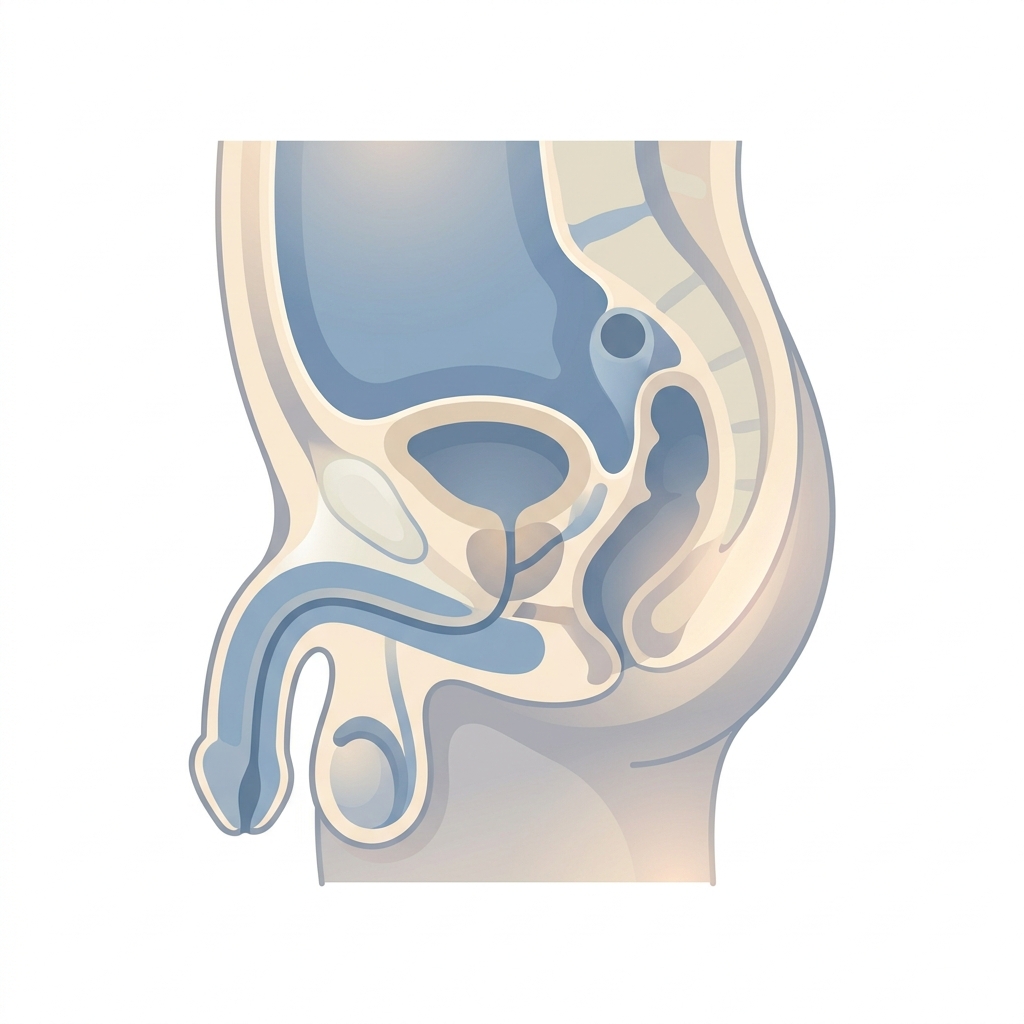
Here is the reassuring truth: men absolutely have a mons pubis. It is the rounded pad of adipose tissue overlying the pubic symphysis, present in both sexes. This is not a cosmetic anomaly or a sign that something has gone wrong. It is a legitimate, textbook anatomical structure.
This article delivers four things: a clear explanation of what the male mons pubis is and why it grows; an understanding of how it mechanically conceals penile length; a practical framework for self-assessing severity; and an evidence-based overview of the options available to address it.
One critical concept is worth previewing: the difference between bone-pressed and non-bone-pressed measurement. For many men, their true penile length is already longer than what they can see in the mirror. The variable is not the penis. It is the fat pad in front of it.
This is a medical topic affecting a significant portion of men, not a fringe cosmetic worry. Male cosmetic procedures have increased 500% over the past 25 years, and men who once considered these concerns off-limits are now seeking real, clinical answers.
The Male Mons Pubis: A Clinical Anatomy Primer
The mons pubis is precisely defined as the rounded pad of fatty tissue lying in front of the pubic symphysis. It is present in both sexes, though it is typically more prominent in females due to estrogen-mediated fat deposition. This definition is grounded in authoritative anatomical sources, including the Encyclopaedia Britannica and Elsevier Complete Anatomy.
Men searching for information about this structure encounter several names for the same thing. “Pubic fat pad,” “suprapubic fat pad,” and the colloquial “FUPA” (Fatty Upper Pubic Area) all describe the identical anatomical region above the pubic bone. Recognizing these terms helps a man understand that what he has noticed is a well-documented part of human anatomy.
In lean males, the average suprapubic fat pad depth is approximately 1.1 cm, plus or minus 0.4 cm. That is a clinically normal baseline, not an excess.
The mons pubis serves two primary physiological functions. First, it cushions the pubic symphysis during physical activity and sexual intercourse. Second, it houses apocrine glands that may release pheromones. This tissue has a purpose; it is not simply extra fat the body forgot to remove. Per Elsevier’s anatomical references, the mons pubis develops coarse hair and abundant adipose tissue after puberty.
The distinction from female anatomy comes down to hormones. In women, estrogen drives more pronounced fat deposition in this region. In men, the pad is typically thinner, but it can expand significantly with weight gain, hormonal changes, or aging.
Why Does the Male Mons Pubis Grow? Six Evidence-Based Causes
Growth of the suprapubic fat pad is a physiological process, not a personal failing. Understanding the drivers helps a man identify which factors apply to him.
- Cause 1: Overall weight gain and caloric surplus. This is the most common driver. The suprapubic region is a preferential fat storage site in men, so extra weight often accumulates here early.
- Cause 2: Genetic predisposition. Fat cell distribution is highly heritable. Some men are genetically inclined to store fat in the pubic region regardless of their overall BMI.
- Cause 3: Aging and slowed metabolism. Testosterone naturally declines with age, and metabolic rate decreases. Both changes promote adipose accumulation in the upper pubic area.
- Cause 4: Hormonal changes and low testosterone. Research from Mayo Clinic and Pennington Biomedical, published in Physiological Reports, shows that in males, low testosterone frequently associates with obesity and influences regional fat distribution, including upper-body and suprapubic adiposity.
- Cause 5: Chronic stress and elevated cortisol. The pubic area has a high concentration of cortisol receptors. Sustained, stress-driven cortisol elevation promotes fat deposition in this specific zone.
- Cause 6: Post-surgical changes. Hernia repairs and other lower-abdominal procedures can alter tissue architecture and contribute to suprapubic fat accumulation.
This is a widespread concern, not an outlier condition. Obesity prevalence in middle-aged men reaches up to 40.8%, according to a narrative review in Translational Andrology and Urology.
How the Suprapubic Fat Pad Conceals Penile Length: The Mechanics
The concealment effect is straightforward. Excess suprapubic fat physically buries the base of the penile shaft, creating the illusion of a shorter penis without any change in actual anatomical size. The fat pad functions like a sleeve that slides over the base of the shaft, hiding length that is anatomically present.
The magnitude is significant: the suprapubic fat pad can conceal 1 to 2 inches (2.5 to 5 cm) of penile shaft length.
This point deserves emphasis. The concealment is mechanical, not a true size reduction. The penis itself has not changed.
The 2015 BJU International meta-analysis of more than 15,500 men established average erect penile length at 13.12 cm (5.16 inches) bone-pressed. That benchmark is frequently distorted downward in men with significant suprapubic fat when measured without compressing the pad. A 2024 study of 1,499 patients in the International Journal of Urology confirmed that suprapubic fat introduces measurement error in penile length assessment, requiring fat-pad compression for accurate results.
This has a real psychological dimension. Understanding that perceived shortness may be a concealment effect, rather than a size deficit, is clinically reassuring for many men.
BPEL vs. NBPEL: Understanding True Penile Length
Two measurements define this conversation.
Bone-Pressed Erect Length (BPEL) is taken by pressing the ruler firmly through the suprapubic fat pad to the pubic bone. It represents true anatomical penile length.
Non-Bone-Pressed Erect Length (NBPEL) is measured from the base of the visible shaft without compressing the fat pad. It represents only what is externally visible.
The difference between these two numbers directly reflects the depth of the suprapubic fat pad, which can obscure 1 to 3 cm of length between the two measurements.
For a practical self-assessment, a man can approximate his BPEL by pressing a ruler firmly against the pubic bone at the base of the erect shaft. This reveals the length that is anatomically present but visually hidden. For a more detailed guide on how to measure penile length accurately, including the bone-pressed technique, additional clinical context is available.
Returning to the benchmark: the clinical average is 13.12 cm BPEL. Many men who believe they fall below average are actually measuring NBPEL, not BPEL, and their true length is often within or above the clinical average. Urologists and researchers use BPEL as the standard precisely because it eliminates the confounding variable of the fat pad.
The Severity Spectrum: How Much Length Is the Fat Pad Concealing?
Clinicians classify suprapubic fat concealment on a severity spectrum tied to BMI ranges. This framework gives a man a structured way to understand where he falls.
Mild Concealment (BMI 25 to 30): The Early Stage
- BMI range: 25 to 30 (overweight category).
- Estimated apparent length reduction: approximately 1 to 2 cm.
- Clinical presentation: The fat pad is noticeable, but the shaft base is not significantly buried. The gap between BPEL and NBPEL is modest.
- Functional impact: Minimal to none. This is primarily a cosmetic and perceptual concern.
- Typical profile: A man who has gained 20 to 30 lbs over several years and notices the base of his penis appears shorter than it once did.
At this stage, overall weight loss and targeted fat reduction can meaningfully restore visible length.
Moderate Concealment (BMI 30 to 40): Clinically Significant Burial
- BMI range: 30 to 40 (obese category).
- Estimated apparent length reduction: approximately 2 to 5 cm, a clinically significant difference that can make a normal-sized penis appear substantially shorter.
- Clinical presentation: The shaft base is visibly buried in the fat pad. NBPEL may fall 2 to 5 cm below BPEL.
- Functional impact: May begin to affect sexual function, hygiene, and urinary stream direction.
The Cleveland Clinic documents that buried penis occurs when abdominal, thigh, or scrotal skin conceals a typical-sized penis, with a noted connection to rising rates of BMI over 30. At this stage, diet and exercise alone rarely produce targeted results, and clinical intervention is typically required.
Severe Concealment / Adult Acquired Buried Penis (BMI 40+): A Medical Condition
- BMI range: 40 and above (morbidly obese category).
- Clinical definition: Adult Acquired Buried Penis (AABP), the entrapment of the phallus by surrounding fat and/or skin. The shaft may be partially or completely buried.
A 2026 study in Translational Andrology and Urology found AABP in 1 in 6 men undergoing bariatric surgery. A PMC/NCBI review confirms obesity is the most common etiology.
The consequences extend well beyond aesthetics: increased penile cancer risk (7% invasive cancer prevalence and 35% premalignant lesion prevalence in one series of 150 patients), urethral strictures, chronic skin infections, hygiene difficulties, and mood disorders including depression. AABP is a recognized medical condition, and at this severity, surgical intervention such as lipectomy, liposuction, or monsplasty is typically required.
Can Diet and Exercise Reduce the Male Mons Pubis?
This is the first question most men ask, and the honest answer requires nuance.
Spot reduction is a myth. The body cannot selectively burn fat from one area through diet or exercise alone. Overall weight loss reduces the fat pad proportionally, alongside fat everywhere else.
The commonly cited clinical estimate is approximately 1 inch of visible penile length gained per 30 to 50 lbs of weight lost. That is meaningful, but often insufficient for men with moderate-to-severe concealment.
Weight loss remains a sound first-line approach for mild cases and a valuable complement to clinical procedures for more advanced cases. One important caveat applies: rapid or significant weight loss can permanently stretch skin. Some men require a monsplasty (a pubic lift with skin excision) afterward, because skin may not fully retract on its own.
For men who have already lost weight, are at a healthy BMI, or have tried lifestyle changes without satisfactory results, clinical fat reduction options offer targeted solutions.
Clinical Options for Male Mons Pubis Fat Reduction
The following is an educational overview of the treatment landscape, intended to prepare a man for a productive consultation. One principle unites all of these approaches: fat reduction reveals existing penile length. It does not add length or girth.
Non-Surgical Option: Cryolipolysis (CoolSculpting)
Cryolipolysis uses controlled cooling to destroy fat cells without surgery. The body naturally eliminates those cells over weeks to months.
A 2021 study in Andrologia of 46 male patients demonstrated that cryolipolysis of the suprapubic fat pad increased mean apparent stretched penile length from 12.1 cm to 12.88 cm across three sessions, a statistically significant gain of approximately 0.78 cm from fat reduction alone (p < .001).
Ideal candidates are men with mild-to-moderate suprapubic fat who prefer to avoid surgery. Limitations include gradual results, the potential need for multiple sessions, and reduced effectiveness for severe cases. Minimal downtime makes it appealing for men with demanding schedules.
Surgical Options: Liposuction and Lipectomy
Surgical fat reduction includes traditional liposuction, VASER liposuction (ultrasound-assisted), and laser-assisted liposuction. These procedures directly remove the suprapubic fat pad, producing more immediate and dramatic results than non-surgical options.
The Journal of Sexual Medicine (2019) describes how obese patients with generous suprapubic fat pads experience decreased visible phallic length and details the surgical concept of suprapubic fat pad excision. Recommendations in the International Journal of Impotence Research (2022) cover the structured management of buried penis, including lipectomy and liposuction.
Ideal candidates are men with moderate-to-severe accumulation or those who have not achieved satisfactory results non-surgically. Fat harvested during liposuction can potentially be used for penile girth enhancement, making the two procedures combinable in a single session.
Monsplasty (Pubic Lift): Addressing Skin Laxity After Weight Loss
Monsplasty removes excess skin and fat from the pubic area and is often necessary after significant weight loss when skin does not retract. Liposuction alone cannot address excess skin, so a pubic lift with skin excision may be required for a clean contour.
Ideal candidates are men who have undergone bariatric surgery or major weight loss with residual skin laxity. The 2026 Translational Andrology and Urology study notes that bariatric surgery improves voiding, anatomic, and sexual function in men with AABP, with surgical reconstruction often a necessary follow-up. Recent surgical series report over 85% successful reconstruction rates, per a 2024 PMC/NCBI review.
Fat Reduction vs. Girth Enhancement: Two Distinct Interventions, One Complementary Goal
This distinction is where most content on this topic falls short, and it is essential for making an informed decision.
Fat reduction (liposuction, cryolipolysis, monsplasty) reveals existing penile length by removing the tissue that conceals the shaft base. It does not add length or girth; it uncovers what is already there.
Girth enhancement (hyaluronic acid fillers, autologous fat transfer, silicone implants) adds actual tissue volume to the shaft, increasing circumference. It does not directly affect visible length.
These are mechanistically separate interventions. One addresses concealment; the other addresses volume. They are not competing options but complementary ones. Men exploring penis enhancement without surgery risks will find that non-surgical girth enhancement sits in a distinct category from the fat reduction approaches described above.
The Journal of Urological Surgery (2025) notes that autologous fat injection for girth enhancement can be carried out following cosmetic surgery that diminishes belly fat, explicitly linking the two. The International Journal of Impotence Research frames them as separate but complementary interventions.
A simple framework captures the distinction: Fat Reduction = Reveal. Girth Enhancement = Add. Both = Optimize.
Penile Girth Enhancement: What the Evidence Says
Non-surgical girth enhancement, sometimes called filler phalloplasty, uses hyaluronic acid-based dermal fillers placed beneath the penile skin to enhance girth and volume. This adds tissue volume; it does not reveal hidden length. The two procedures address different dimensions of penile aesthetics.
The market context reflects rising demand. The global male aesthetics market was valued at roughly $6.61 to $7.1 billion in 2025 to 2026 and is projected to reach $11.17 billion by 2032, with penile enhancement among the fastest-growing segments. The psychological dimension is substantial: a study of 25,592 men found that 45% desired a larger penis size.
Autologous fat transfer offers an integrated option. Fat harvested from the suprapubic or abdominal area during liposuction can be used for girth enhancement, making fat pad removal and augmentation potentially combinable in a single session. Understanding how penile filler works at a mechanistic level helps men evaluate whether this approach aligns with their goals.
Non-Surgical Penile Girth Enhancement at Stoller Medical Group
For men who understand the anatomy and are ready to explore solutions, Stoller Medical Group (operating as Penis Enlargement New York City) offers a specialized, evidence-based approach to non-surgical male enhancement.
The primary service is penile girth enlargement using Belefil®, a hyaluronic acid-based, medical-grade dermal filler placed beneath the penile skin. The procedure is non-surgical, with no cutting and no general anesthesia. It is performed on an outpatient basis in under one hour and can produce an increase of up to 1 to 1.5 inches in girth.
The results profile is compelling: immediate visible enhancement, 80 to 90% permanent improvement, results lasting 18 to 24 months, and a natural look and feel in both flaccid and erect states, with normal sensation and function maintained. Recovery is fast; patients are back on their feet in 10 days, compared to 40 or more days with other permanent fillers, and sexual activity can resume within 7 to 10 days. A staged treatment approach uses multiple sessions rather than a single dramatic procedure, allowing for precision, symmetry, and reduced risk.
The practice brings substantial authority: over 15,000 enlargement procedures performed. Dr. Roy B. Stoller is board-certified with 25 or more years in aesthetic and restorative medicine and 5 years dedicated specifically to non-surgical male enhancement. In a safety-first stance, the practice does not offer surgical penile lengthening due to its higher associated risks. Five locations serve patients across the Northeast and Midwest: Manhattan, Long Island, and Albany (NY); Chadds Ford (PA); and Eagan (MN).
Understanding the Investment: Pricing for Penile Girth Enhancement
Pricing starts at $7,500 and increases depending on the patient’s desired results and individual anatomy. The model is priced by syringe. Most men begin with a minimum of 10 syringes, and the average first procedure involves approximately 15 syringes.
This is a specialized, physician-performed procedure using medical-grade materials with an 80 to 90% permanent improvement rate. It is not a commodity service, and the pricing reflects that clinical value. Free consultations are available, allowing prospective patients to receive a personalized assessment and an accurate cost estimate before committing. The staged treatment protocol also means the investment can be managed over time while achieving progressive, natural-looking penis enlargement results.
The Psychological Dimension: When Anatomy Becomes Anxiety
Penile appearance concerns carry real psychological weight, and acknowledging this does not mean pathologizing normal curiosity. Recall that 45% of the 25,592 men studied desired a larger penis. This is a majority concern, not a fringe issue.
There is a spectrum, ranging from normal size concern to Small Penis Anxiety (SPA) to clinical Penile Dysmorphic Disorder (PDD). A King’s College London study (2015) developed the first validated screening scale (COPS-P) for PDD, finding that men with clinical PDD show significantly higher rates of erectile dysfunction and social avoidance than controls.
For many men, the most reassuring insight is this: a perceived size deficit is often partly or entirely a concealment effect, not an anatomical reality. Understanding that distinction is genuinely relieving. For men whose concerns persist after understanding the anatomy and addressing the fat pad, a consultation with a qualified physician can help distinguish between a cosmetic concern with a clinical solution and a psychological concern that may benefit from additional support.
Conclusion: Anatomy Is Not Destiny
The male mons pubis is a normal anatomical structure. It can grow due to weight gain, hormonal changes, aging, and genetics, and when it does, it mechanically conceals penile length that is already present.
The bone-pressed versus non-bone-pressed insight is central: many men’s true anatomical length is longer than what they see. The fat pad is the variable, not the penis. The severity spectrum (mild at BMI 25 to 30, moderate at BMI 30 to 40, and severe/AABP at BMI 40 and above) carries distinct implications and appropriate intervention pathways.
The clinical distinction is equally important. Fat reduction reveals existing length; girth enhancement adds volume. These are complementary, mechanistically separate interventions, not competing options. Understanding the anatomy is frequently the first and most important step toward resolving appearance-related anxiety.
A man who has noticed a suprapubic fat pad has a legitimate anatomical concern with evidence-based solutions. He is not alone, and he is not without options.
Ready to Understand Your Options? Schedule a Private Consultation
The logical next step is an educational, no-pressure consultation with a qualified specialist. Discretion and confidentiality are core to how the practice operates, a priority that matters deeply to professional men.
The consultation is free, with no financial commitment required to receive a personalized anatomical assessment and treatment recommendation. Five convenient locations serve patients across the Northeast and Midwest: Manhattan, Long Island, and Albany (NY); Chadds Ford (PA); and Eagan (MN). The practice’s authority is well established, with over 15,000 procedures performed under Dr. Roy B. Stoller, board-certified with 25 or more years of experience.
A consultation covers a personalized anatomy assessment, a discussion of fat reduction versus girth enhancement options, realistic goal-setting, a transparent pricing conversation, and a clear treatment plan.
Schedule a private consultation with Penis Enlargement New York City (Stoller Medical Group) today and discover what your anatomy is actually telling you. Free consultations are available at all five locations.